
Customer case · Stadium and professional sport
Live scoring at MHSC,
run from the control room
Montpellier Hérault Sport Club runs its matchday screens and animations from its own control room: live score, team line-ups, clips fired on the big moments. Live since April 2026, and tested in earnest on the very first fixture.

The case in brief
Live has no second take
On a matchday evening the control room does not get a second take. A goal, a booking, a substitution: the information has to reach the giant screen and the video feed as it happens, not three passages of play later.
That is what MHSC runs from its own audiovisual control room with EMITY’s live scoring software, live since April 2026 as part of the club’s wider refresh of its broadcast tools: score on screen, line-ups played out, clips fired on the big moments.
April 2026
went live
1
control room fitted out
6
features built for live
1
point of contact for the club
Who the client is
The professional football club of Montpellier
Montpellier Hérault Sport Club is the professional football club of Montpellier, in southern France, playing at the Stade de la Mosson in the La Paillade district.
Reference points recorded on 14 August 2026 from the club’s encyclopaedia entry: the club traces its history to Stade olympique montpelliérain, founded in 1919; the present entity was created in 1974 as Montpellier la Paillade Sport Club Littoral and took the name Montpellier Hérault Sport Club in 1989. The Nicollin group is its shareholder and Laurent Nicollin its chairman. The club plays in Ligue 2 in the 2026-2027 season.
Those are the club’s own reference points, as at the date shown. What EMITY fitted out is what this page describes: the control room and matchday screens, since April 2026.
- ✓A ground, an audiovisual control room and a giant screen
- ✓Home fixtures right through the season
- ✓A video feed to dress in real time
- ✓Team line-ups to play out before every match
- ✓Several competitions within one season
Where it starts
Three constraints specific to matchday screens
Before any talk of features, here is what a matchday evening asks of a control room.
The second counts, and never comes back
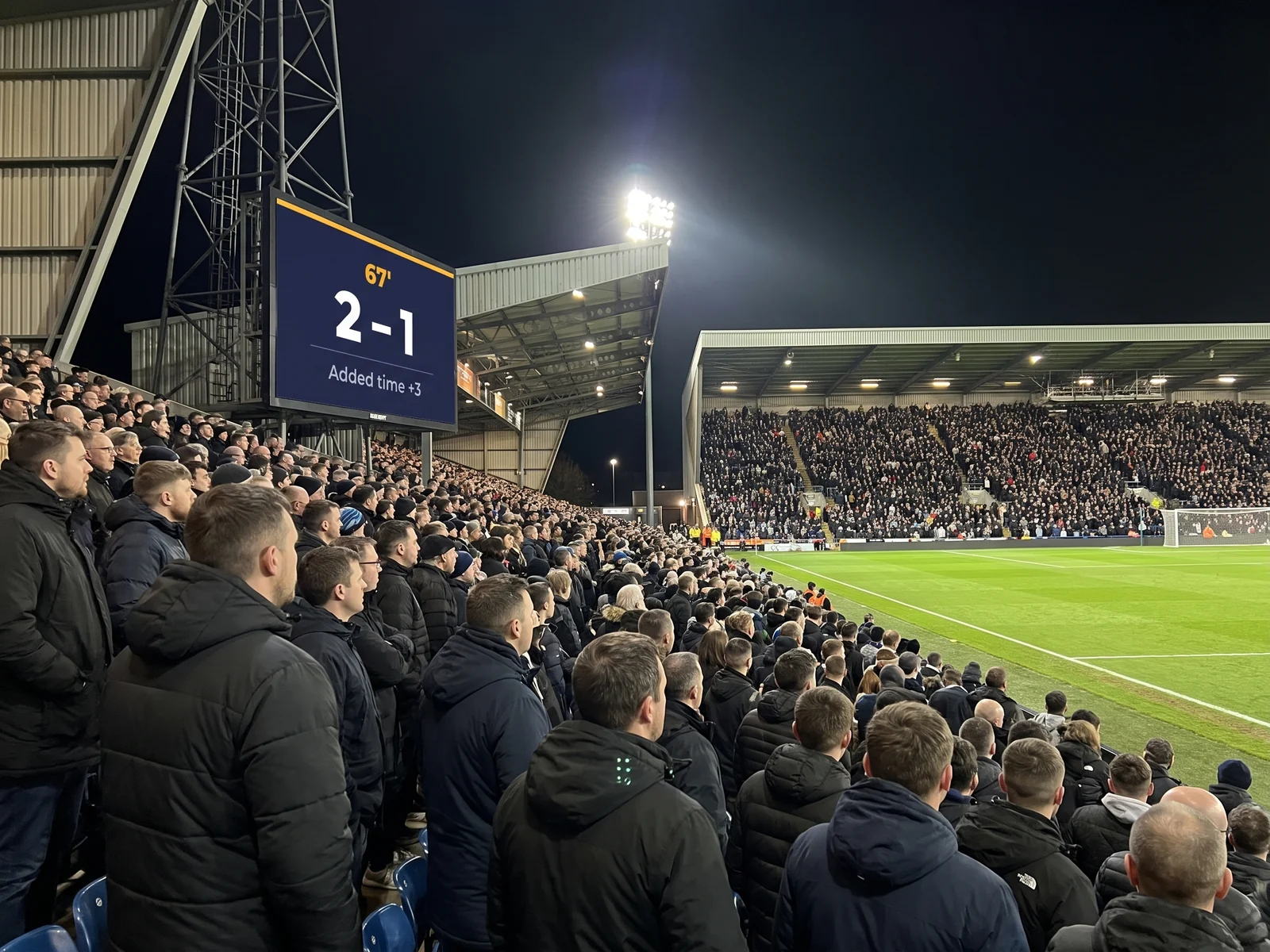
A goal goes up when it is scored, not at half-time. An animation lands on the big moment, or it serves no purpose at all. That is what sets matchday screens apart from every other use of a display.
A control room is not a design studio
On a matchday evening the operator’s hands are full and their attention is on the pitch. Whatever can be prepared is prepared beforehand; whatever is left live has to sit on one key.
One season, several competitions
League, cup, pre-season friendlies, youth sides: teams, crests and display rules all change. Setting everything up again for each fixture simply does not hold.
What they use
Six features built around the demands of live
This is the scope installed in the control room: nothing that does not earn its place on a matchday.
Live keying
Stills, video and animations keyed onto the feed in real time, with no break in transmission.
Vision mixers
The software works with the professional vision mixers in the control room, at the standard a broadcast feed expects.
Colour management
Fine control of colour, so the graphics stay true to the club’s palette from one screen to the next.
Driven from a control surface
The frequent actions sit on physical keys: someone picks it up in a single session, even when the crew changes.
Teams and competitions
Line-ups, player introductions and competition data are prepared cold, then triggered live.
Multi-sport
Other disciplines and other competitions are covered, from a grassroots club to a professional set-up.
Around the ground
Three screens, three jobs during the fixture
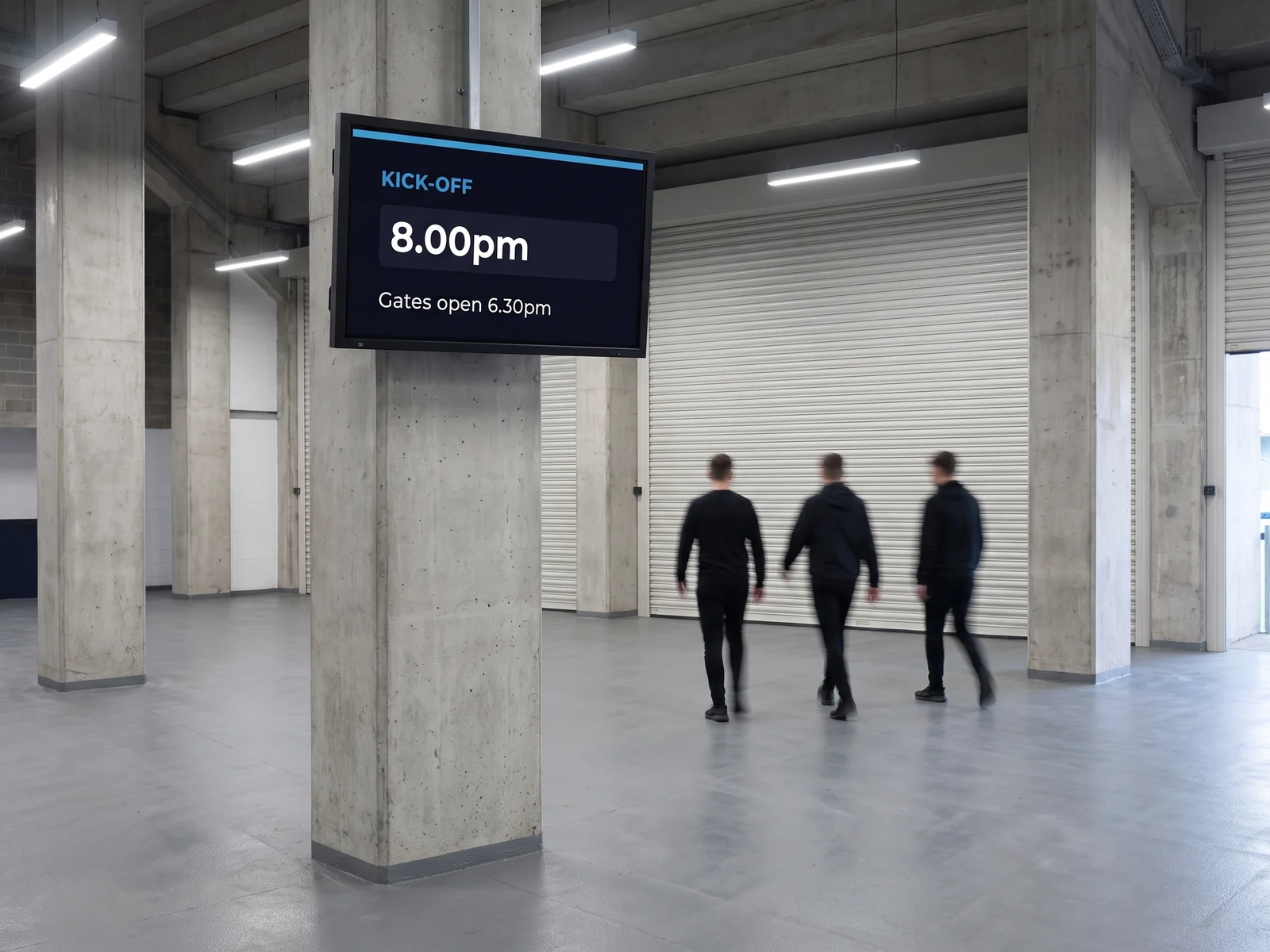
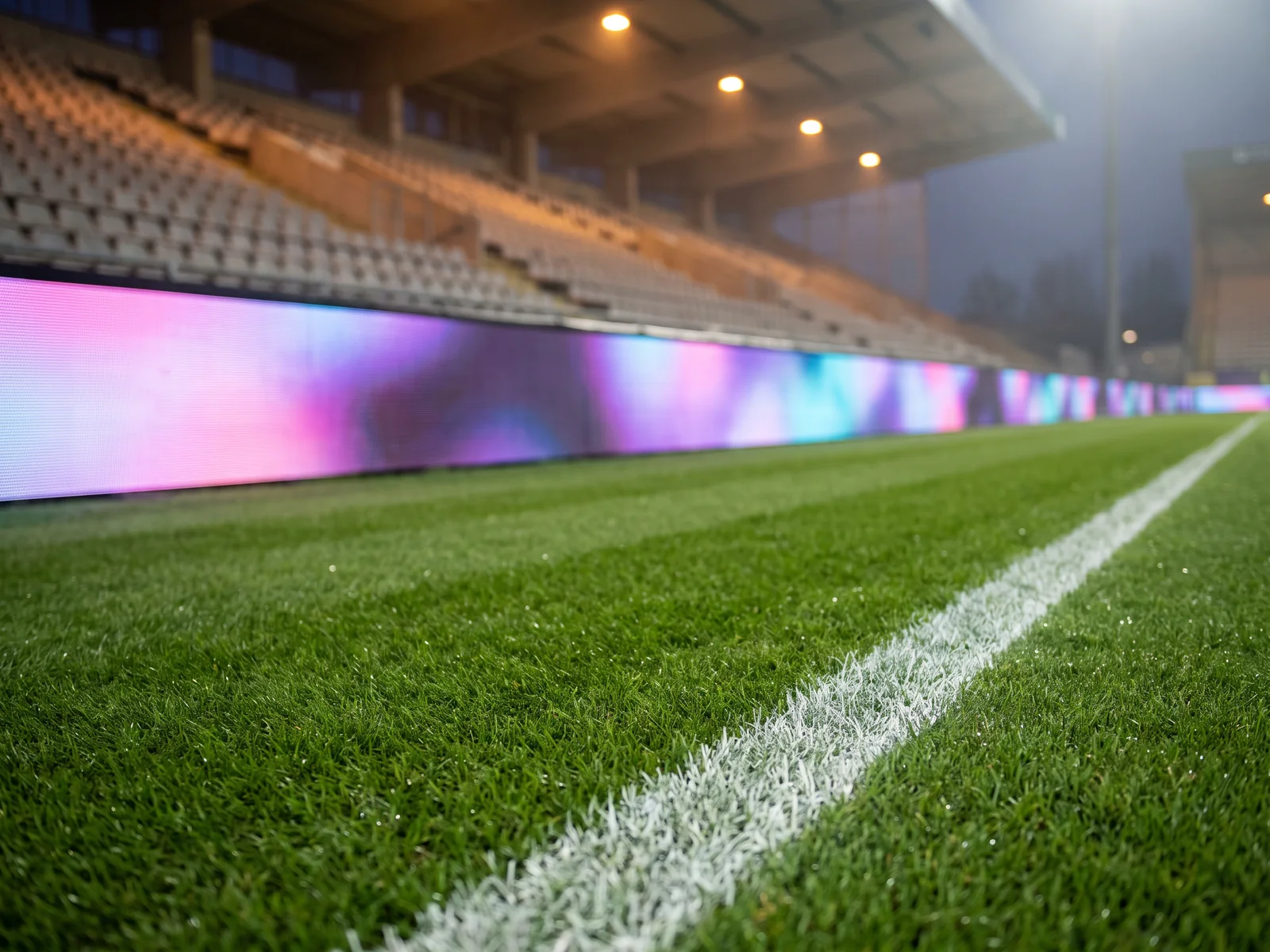
Three staged scenes: the setting illustrates the use, it is not the Stade de la Mosson.
The tool
The screen a match is run from
Everything the operator needs sits on one screen, and that is deliberate: on a matchday evening, hunting through tabs is how a goal goes up late.
The score and the clock hold the centre. The two line-ups sit either side, ready to be played out. Along the bottom runs a preview of what is currently on the giant screen — so what the ground sees is never a guess.
Around that view, a control surface carries the frequent actions on physical keys: add a goal, start and stop the clock, fire a clip. The preparation happens cold, hours before kick-off; what is left live is a single press.
- ✓Score and clock at the centre of the view
- ✓Both line-ups either side, prepared in advance
- ✓A preview of what is live on the giant screen
- ✓Physical keys for the actions that recur
- ✓One session is enough to hand it over to a new crew
Installed · April 2026
Tested in earnest on the first fixture
Installed in April 2026, the setup gives the club dependable control of its live screens: the score, the line-ups and the clips fired during the big moments of a fixture.
The first outing under real conditions was at the Stade de la Mosson against Grenoble. The video below is the record of it — an actual match, not a reconstruction.
The first outing in earnest, at the Stade de la Mosson against Grenoble (GF38).
Why this case matters to us
Live scoring, our real-time test bench
On a customer case the reader expects the client’s words. These are ours: they say what this project asked of our teams.
“Live scoring is something of a performance laboratory for us — our own Formula One. Real-time precision, faultless reliability, messages on screen the instant they matter: every detail counts.”
Close to home
A Montpellier software company, the Montpellier club
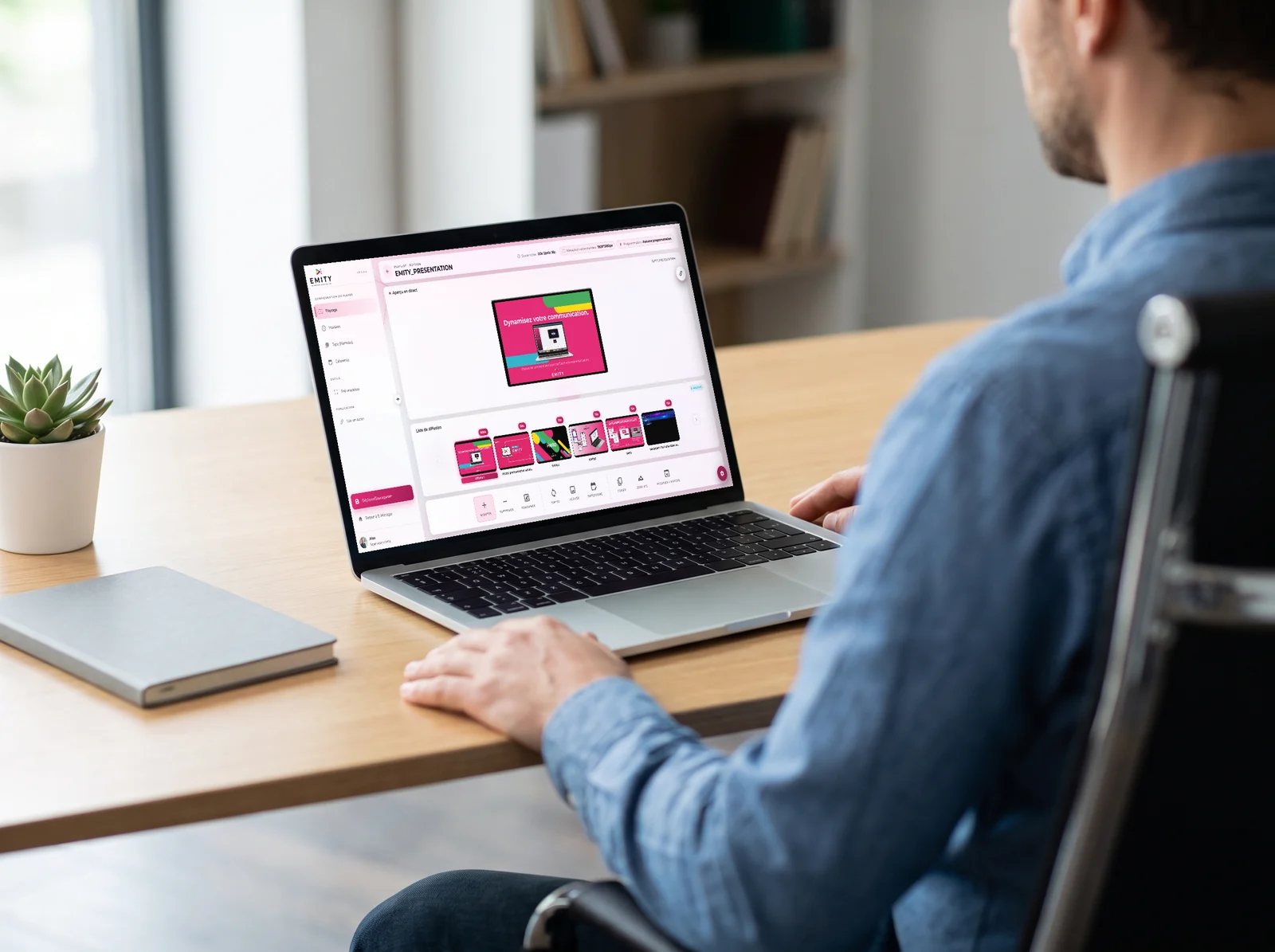
- ✓A software company based in Montpellier, registered in the Hérault
- ✓A team you can reach while a fixture is being prepared
- ✓Feedback from the ground that finds its way into the software
- ✓One point of contact, from go-live to the following season
What this means for you
What this case says to clubs and sports venues
Ground, sports hall, leisure centre, training complex: the same question comes up the moment a result has to appear live in front of an audience. The size of the control room changes; the logic does not.
Across the whole estate, EMITY today connects more than 7,000 screens for more than 1,000 customer accounts in over 20 countries, supported by more than 130 certified reseller partners.
The live scoring software
The features, the screens and the sports covered, in detail: the live scoring page. That is where this case leads.
Sports and fitness
Live scoring put back among the other screens a sports venue runs: the sports and fitness sector page.
Screens, the platform, the other cases
What displays and what drives it: the screens and E-MANAGER, the digital signage platform. And the other customer cases, as the original page did.
Frequently asked questions


