
EMITY×ARTPOINT
Partner · Digital art
Digital art on screen: ARTPOINT artworks in your spaces
Digital art comes into your spaces.
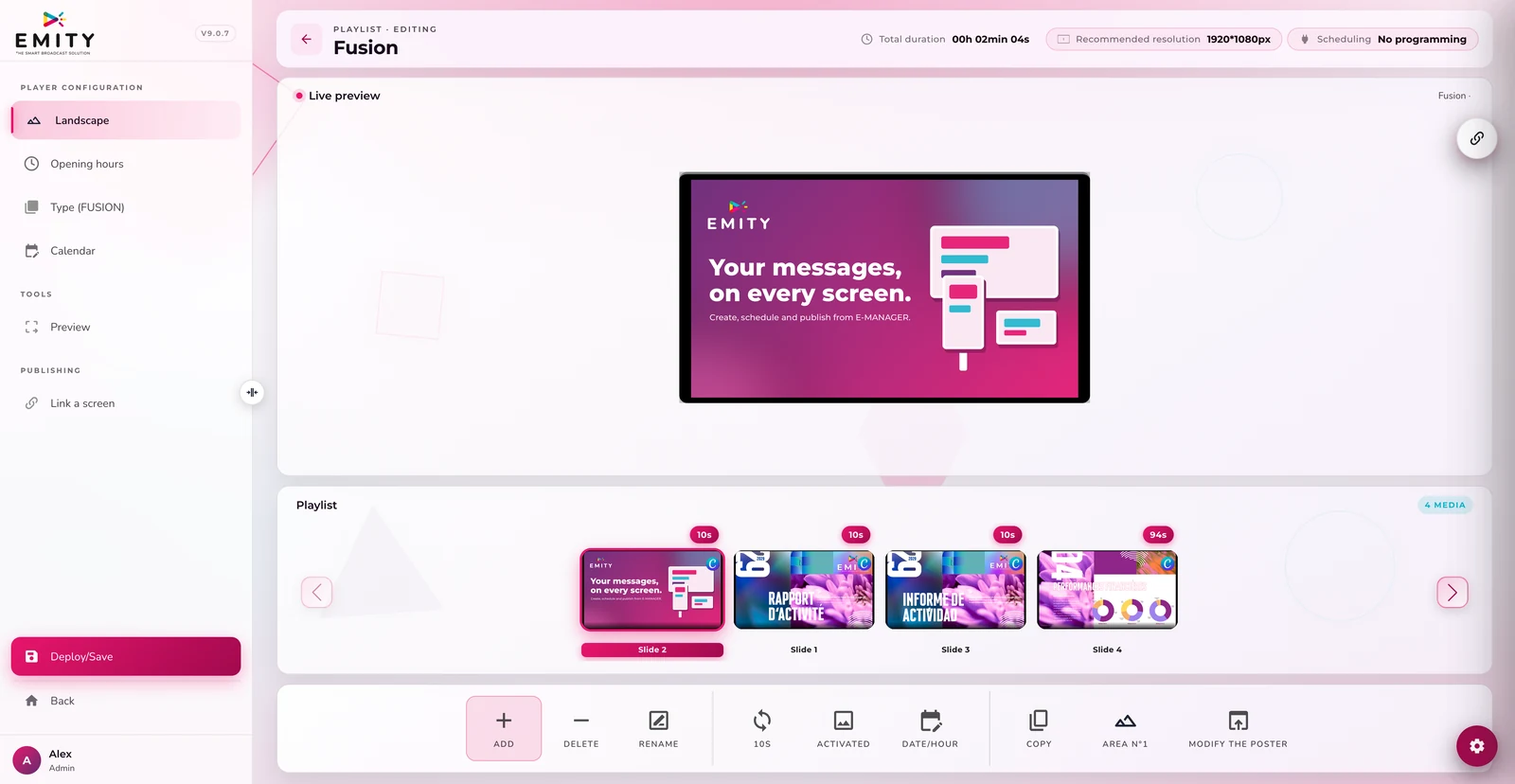
ARTPOINT brings together artists and prepares their works for the screen. EMITY plays them on your screens, in the same playlist as your information: the artwork fills the free slots and steps aside as soon as information needs to go out.
ARTPOINT figures taken from artpoint.fr on 22/10/2026.
Who brings what
Two companies, two roles: the artwork on one side, the screen on the other.
- Curation: an exhibition programme designed for your venue and your audience
- Artists’ works prepared for the screen, with their label
- The selection refreshed monthly or quarterly
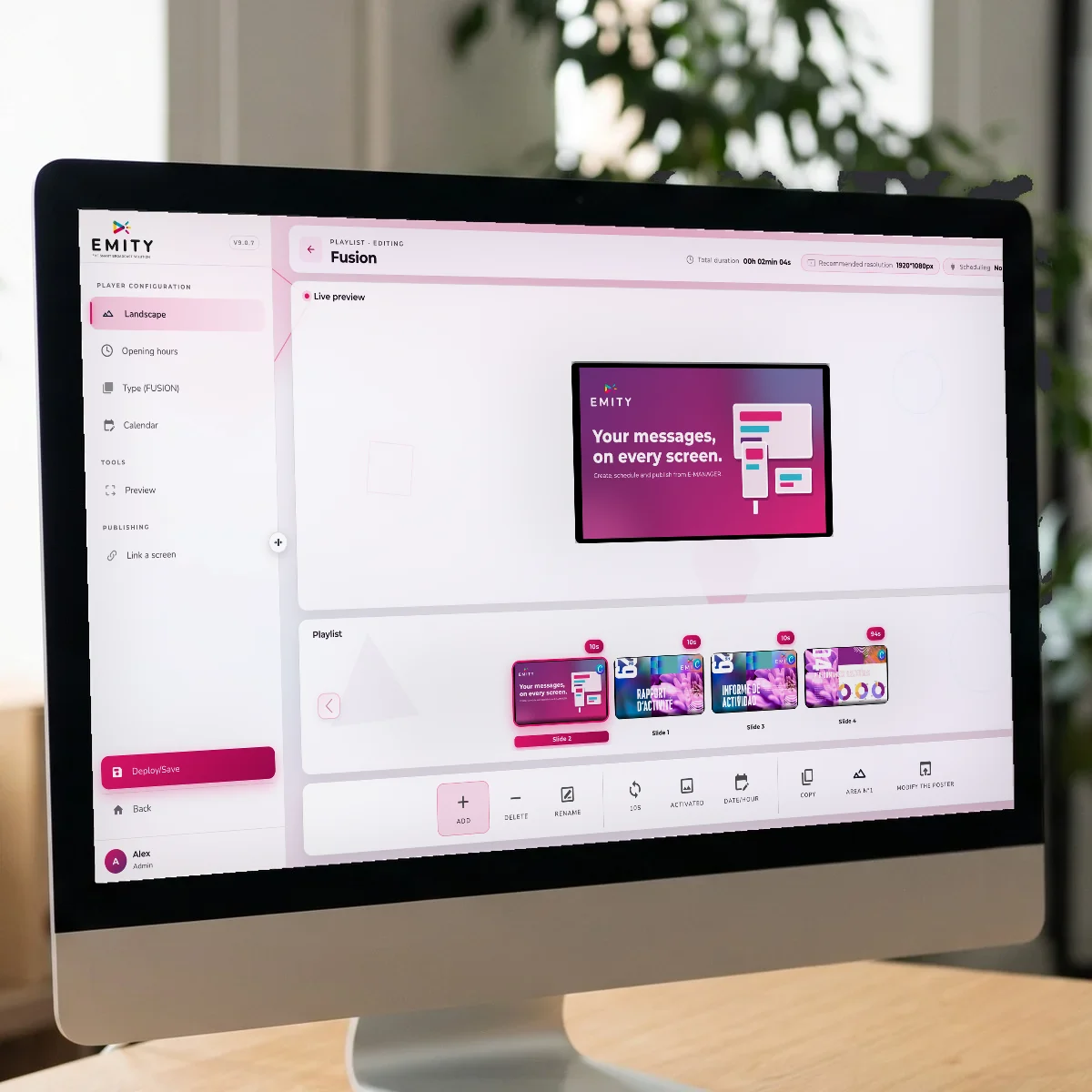
- The artworks in your E-MANAGER playlists, between your information
- Time slots: art at quiet times, information at busy times
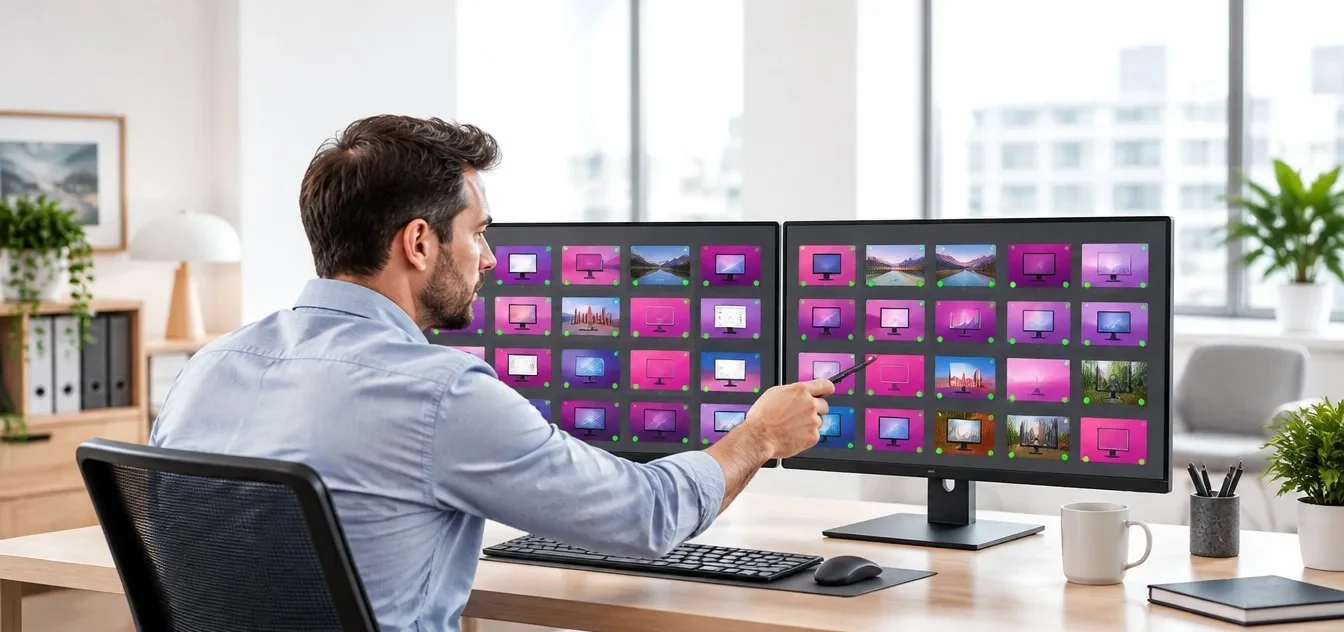
- An estate of one screen or a thousand, any brand, run from a single interface
TogetherThe essentials
Digital art on screen:
what the term covers
Digital art on screen means showing works created for the screen (video, generative art, animation) on the screens of a place people pass through: reception hall, hotel lobby, waiting room, break area. With ARTPOINT and EMITY, the artwork becomes one line of the schedule: it fills the free slots and steps aside as soon as information needs to go out.

ARTPOINT figures taken from artpoint.fr on 22/10/2026.
ARTPOINTThe partnership
An artwork is
content like any other
A reception screen carries your information for part of the day only. The rest of the time it repeats the same visuals — or sits dark, which reads as a fault. That spare time is what ARTPOINT’s artworks come to fill.
One example: rolling news turned into artwork
ARTPOINT reports the case of a private bank in Paris whose reception screens ran rolling news channels on a loop. Those same screens now carry contemplative artworks, opening the client journey rather than crowding it. The hardware never changed — only what plays on it.
ARTPOINTThe gallery
The catalogue
in motion
A digital artwork is not read like a poster: it moves, slowly, without end. Here are six extracts from the catalogue, shown as they play — looping and silent.
Artworks from the ARTPOINT catalogue, shown as short silent loops. Each artwork remains the property of its author.
TogetherThe settings
Where art
finds its place
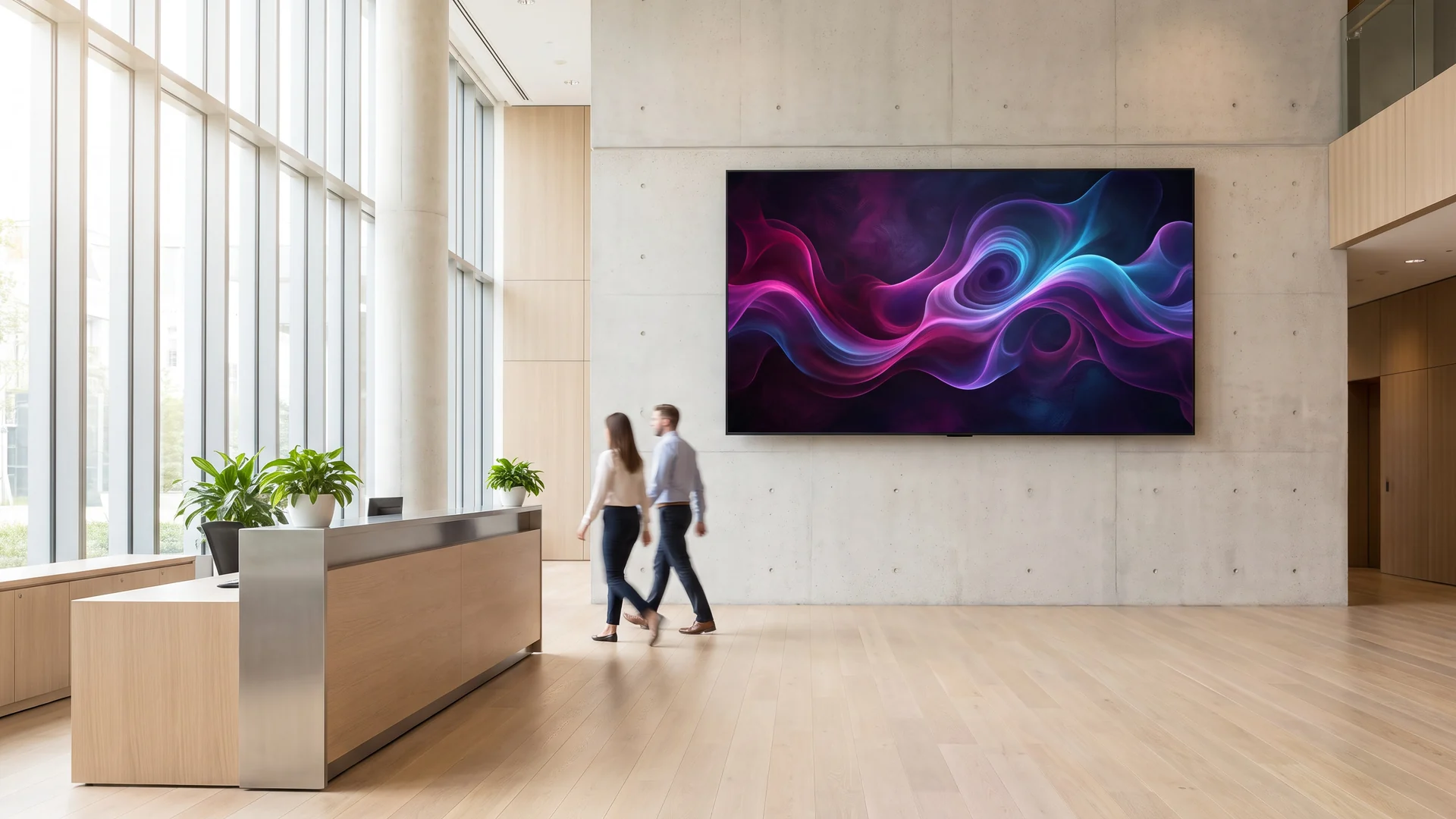
A hall, a waiting room or a corridor is not always meant to carry a message. Art on screen is not only for cultural venues: all it takes is a screen on the wall, and visitors with time to look at it.
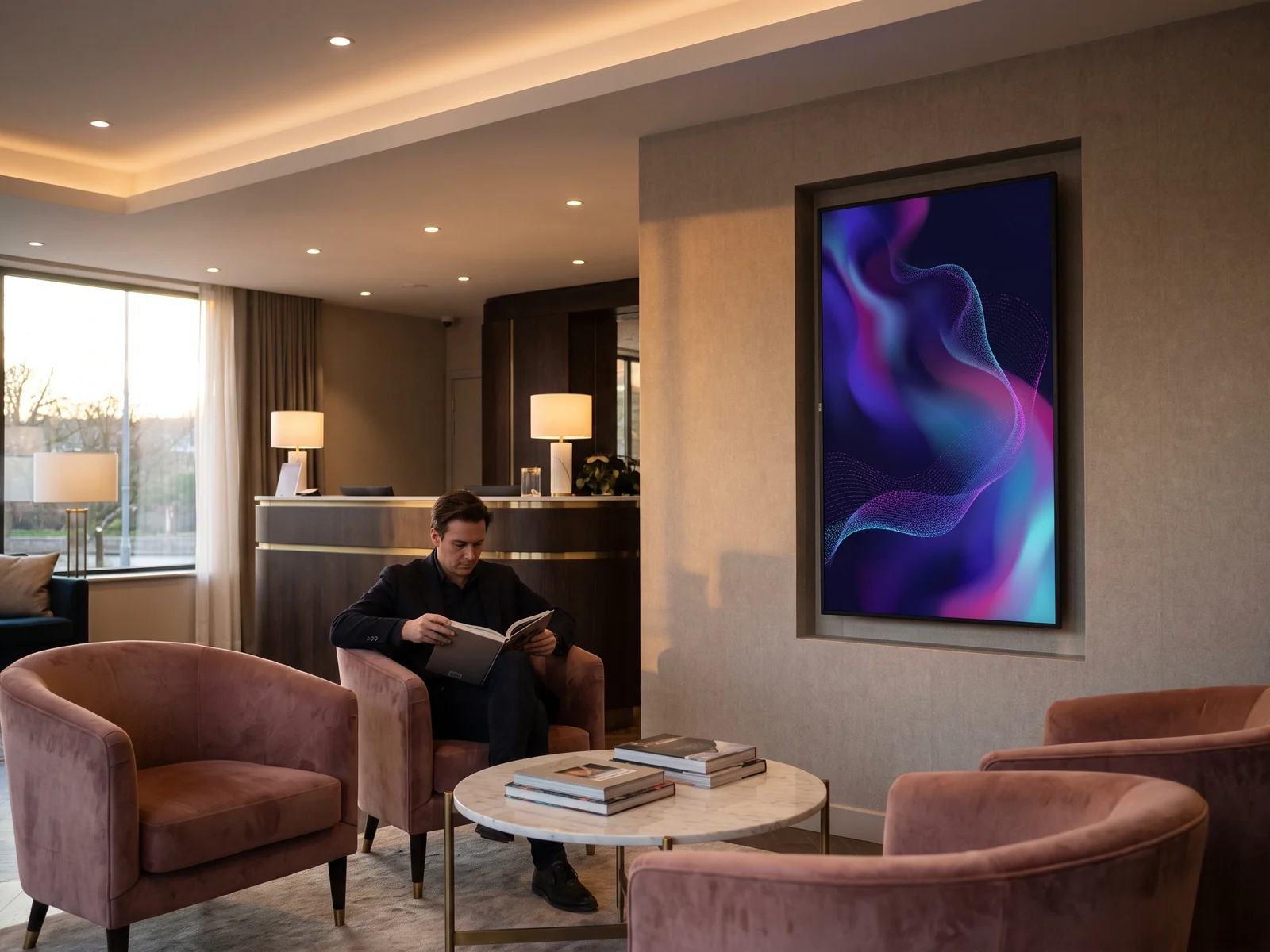
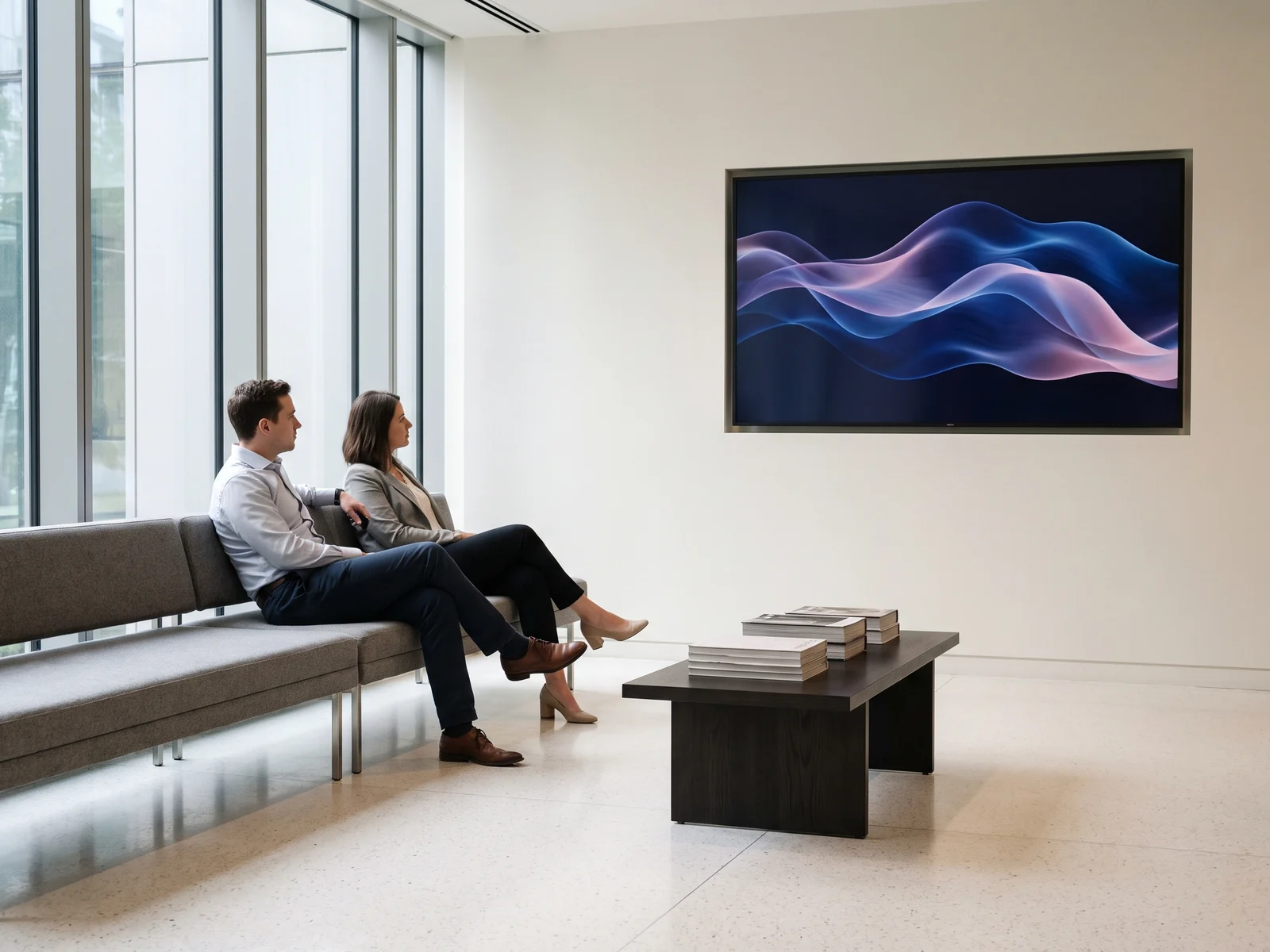
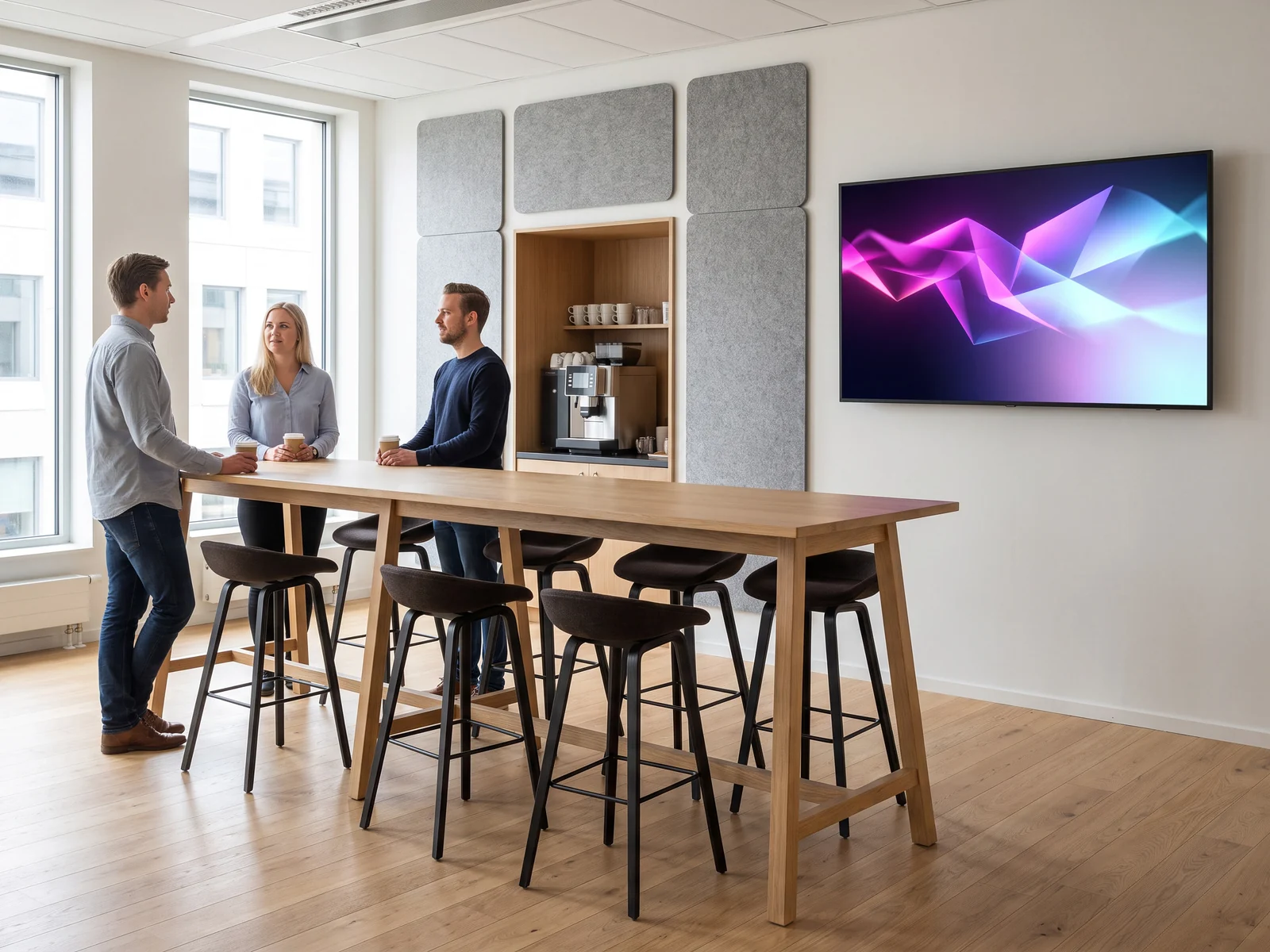
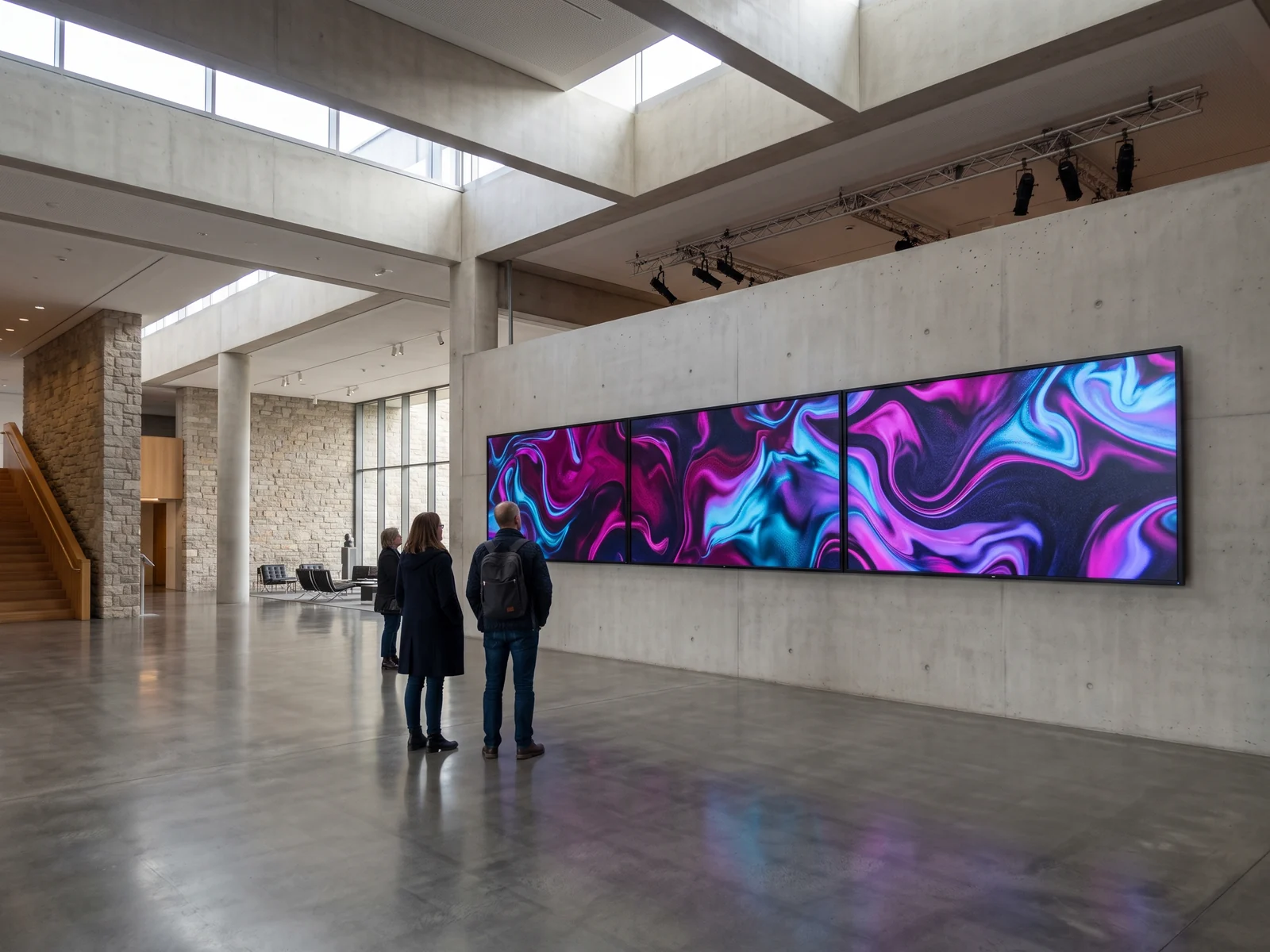
Each setting has its own page: hotels, companies, care homes and residences, where artworks belong in the shared areas, and museums, whose needs are their own.
TogetherGetting started
How the artworks
reach your screens
Four steps, three of which are settled once and for all.
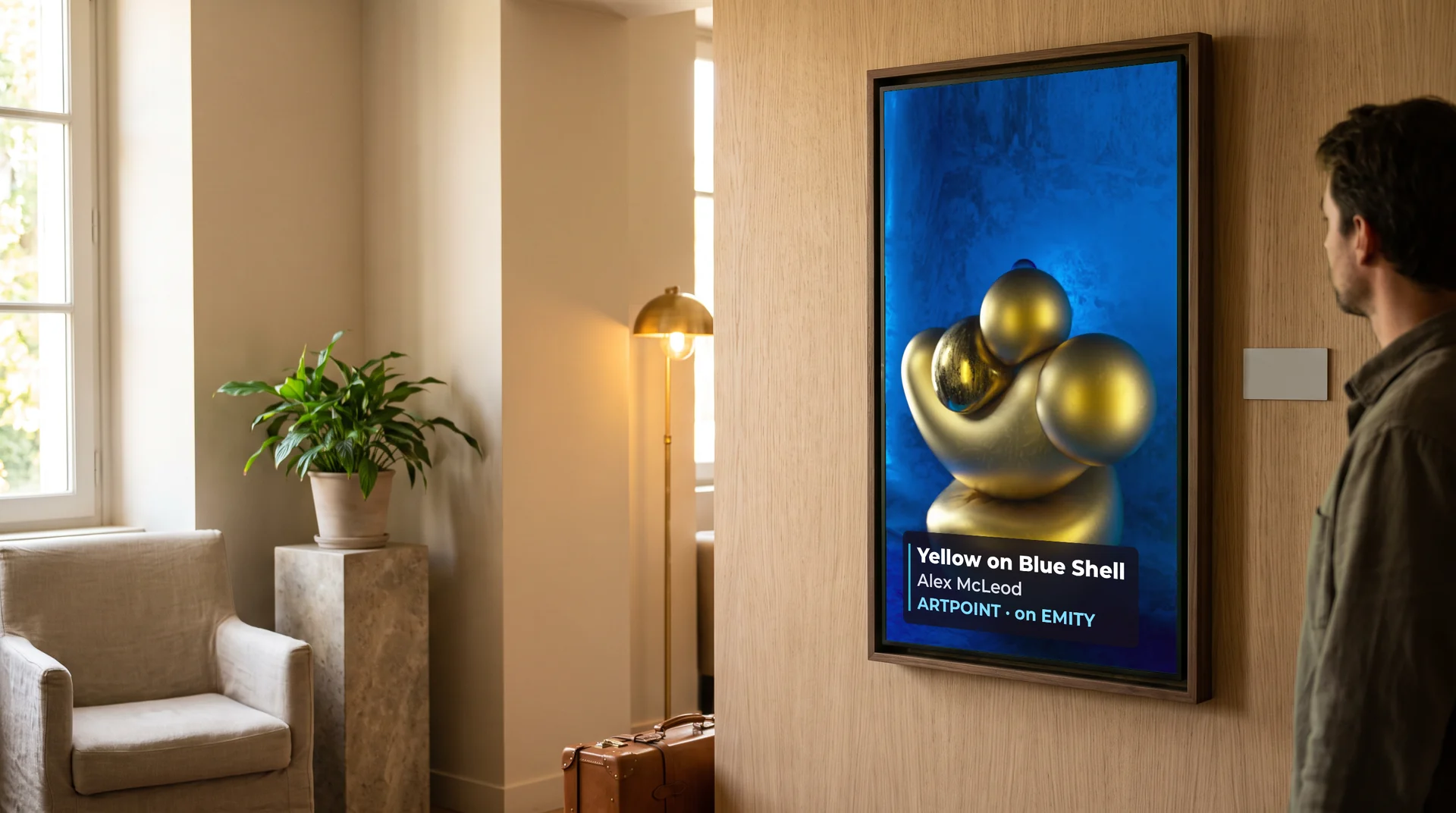
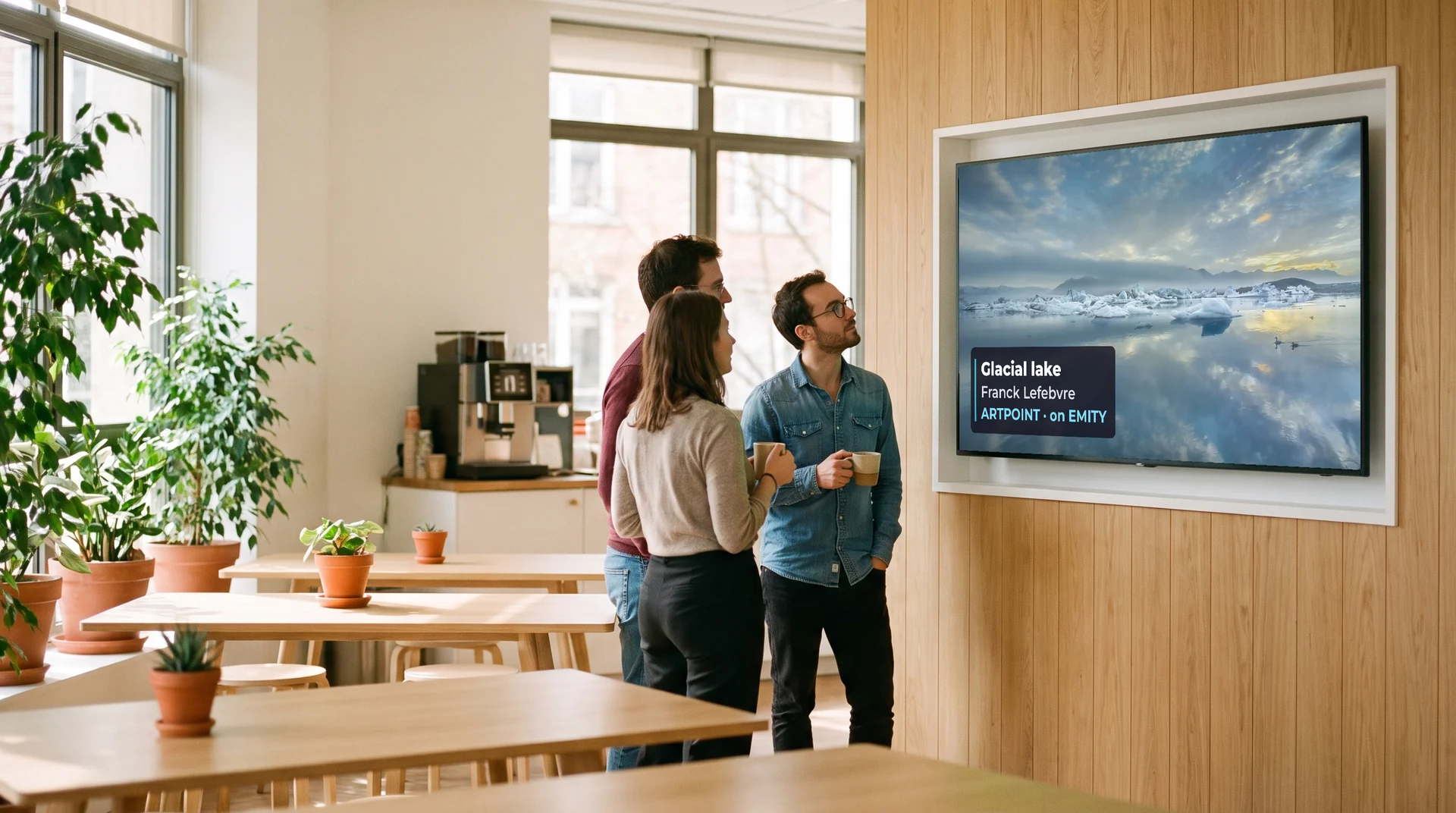
EMITYPlayback
What a digital signage
platform changes
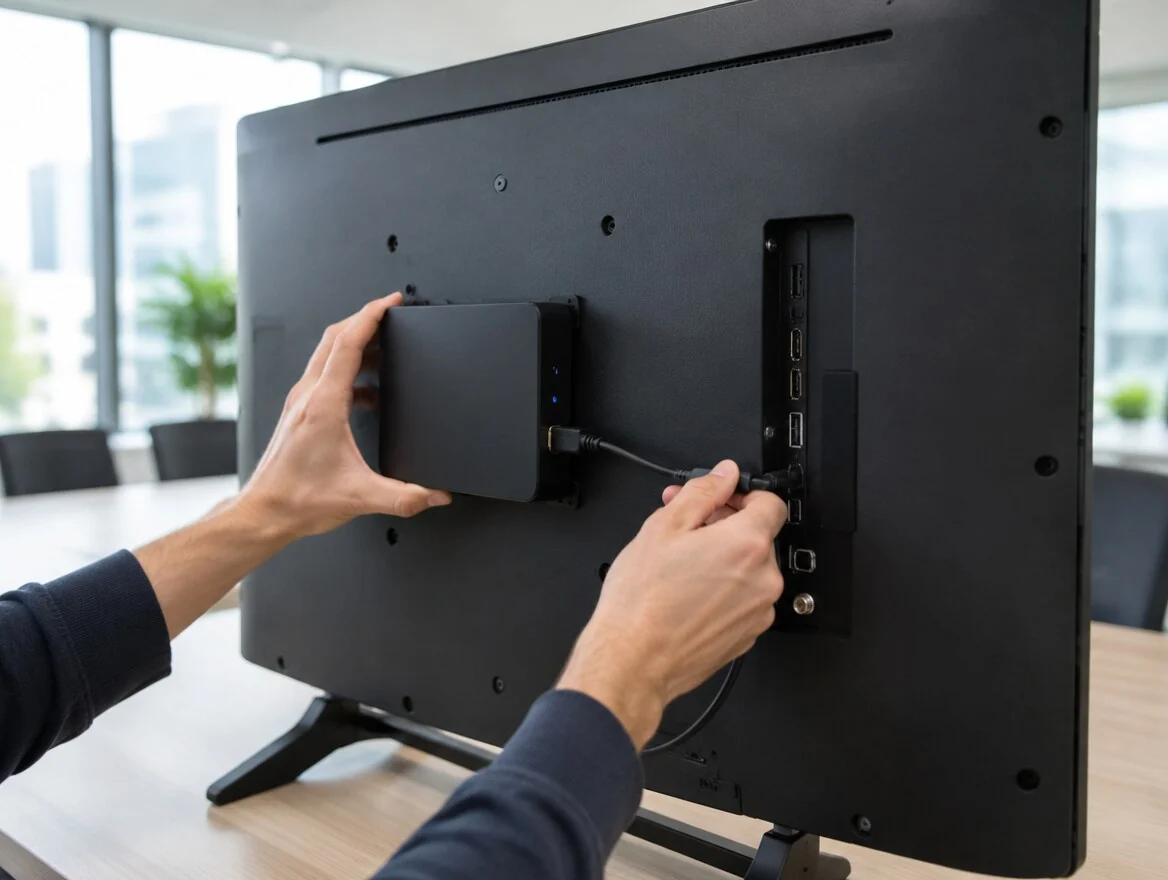
Playing an artwork takes more than a file and a screen. Here is what the platform handles once the artworks arrive.



ARTPOINTIn the field
Installations
already in place
The scenes above illustrate uses. These are photographs of existing installations, carried out by ARTPOINT for its clients: offices, hotels, airports, shopping centres. ARTPOINT shows more than sixty clients on its website (checked on 22/10/2026).
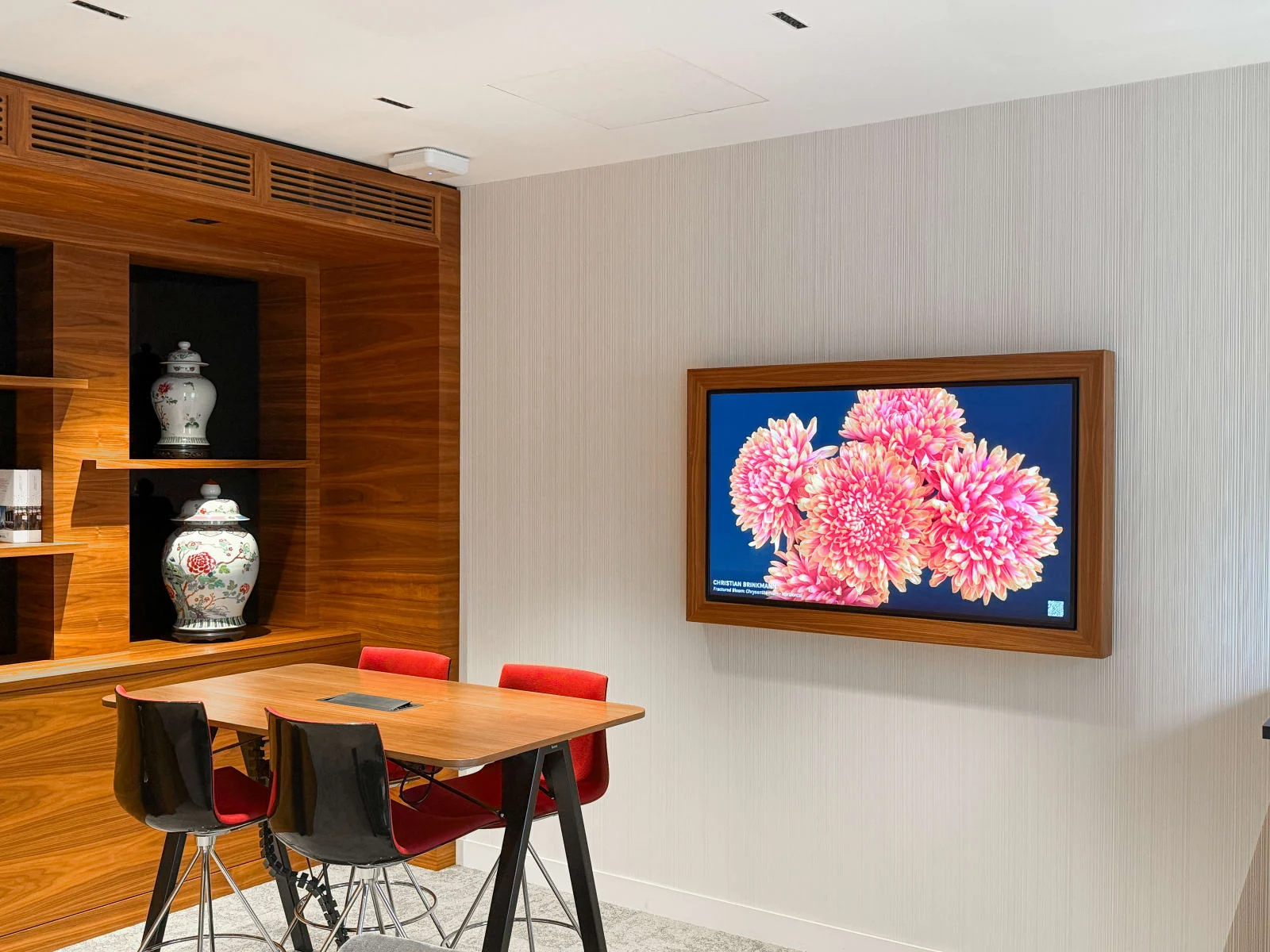
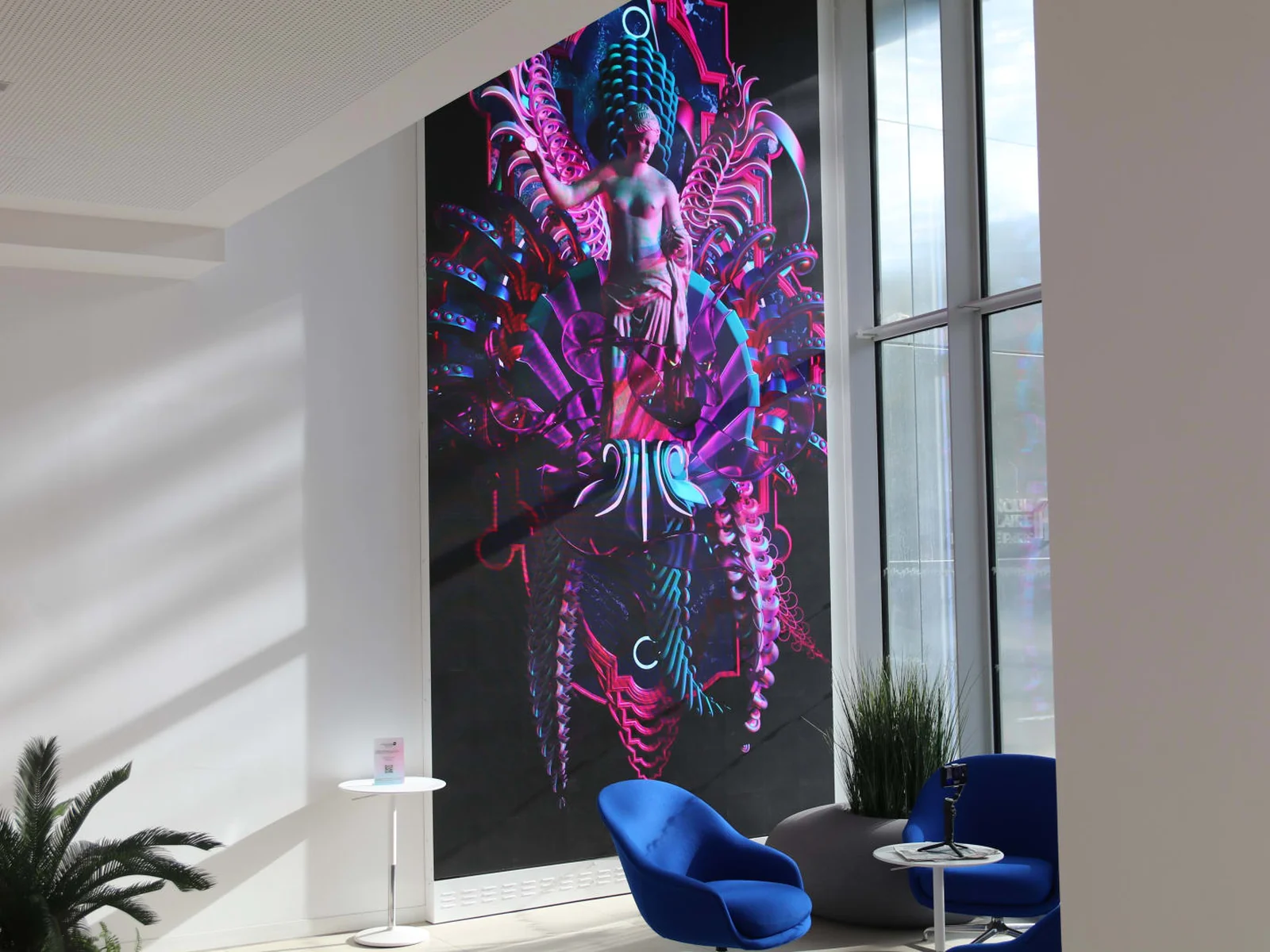
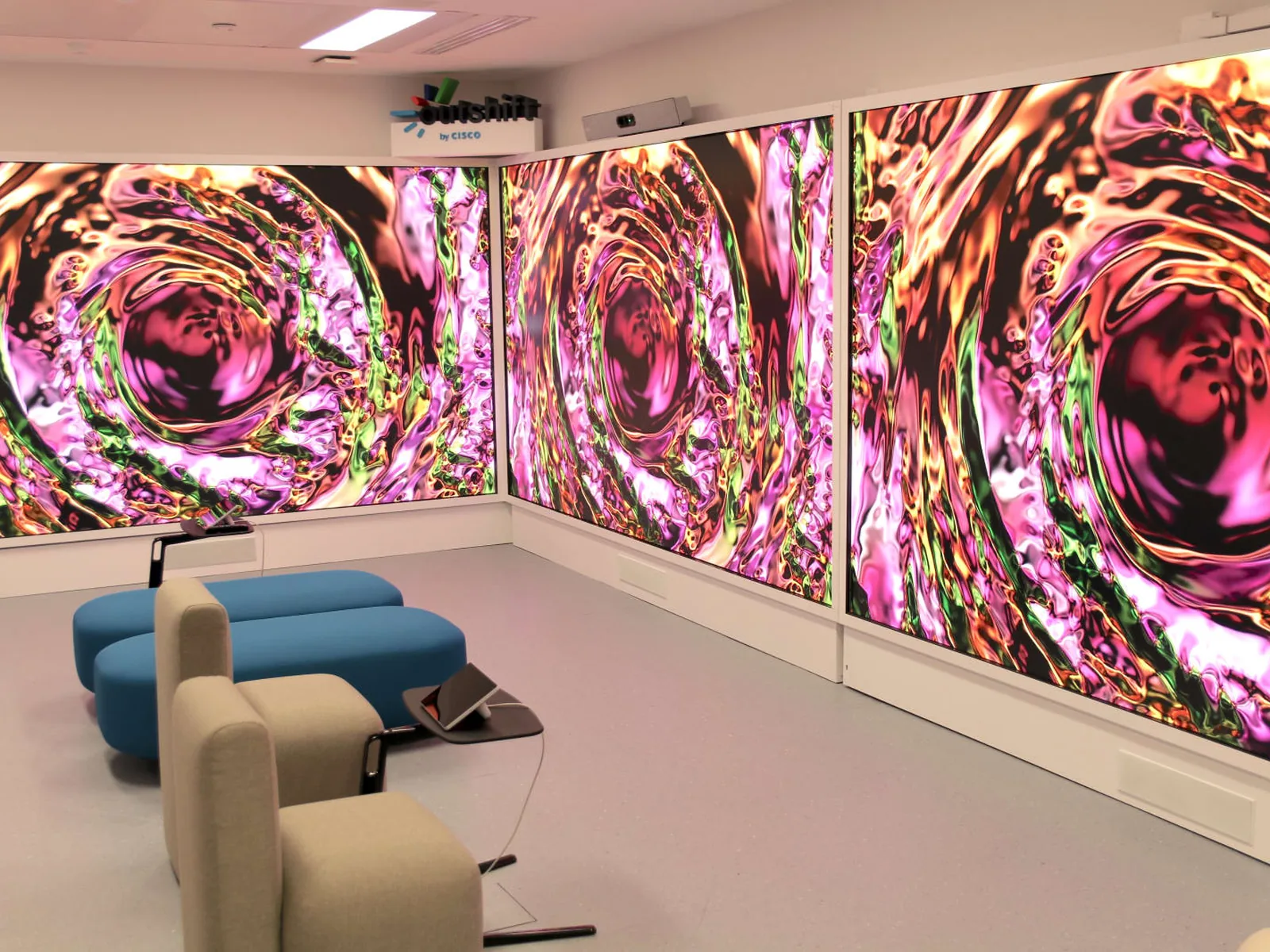
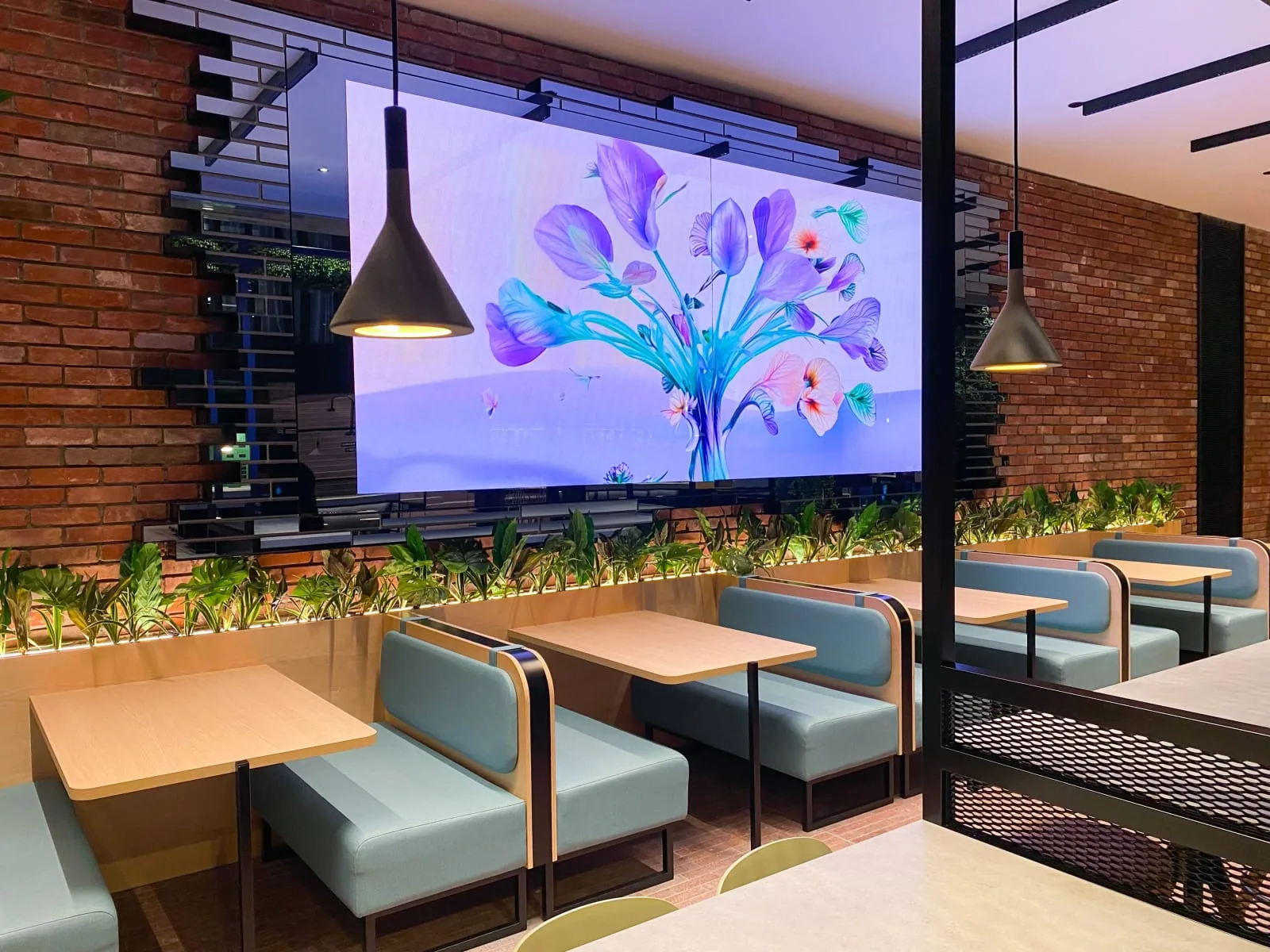
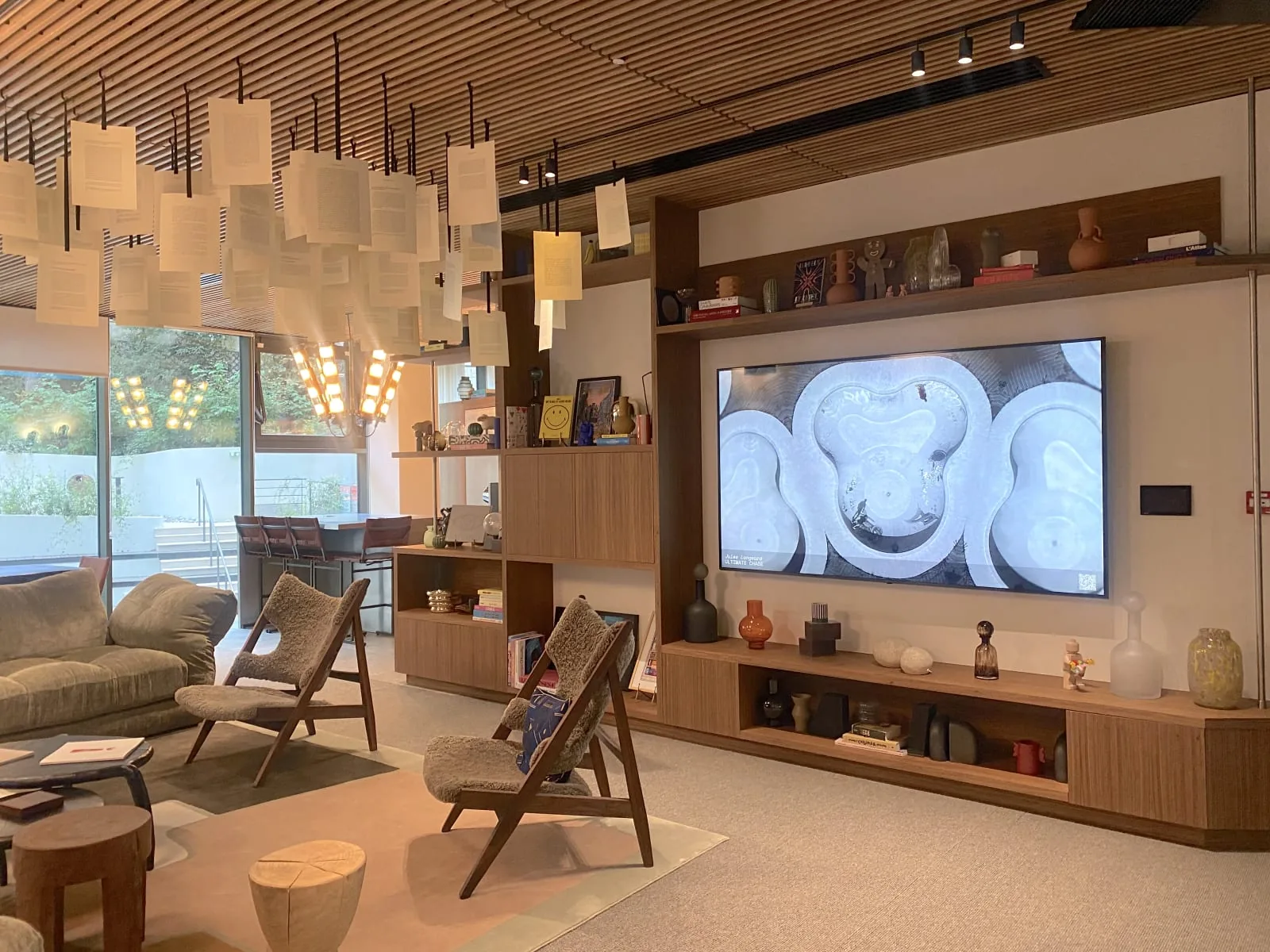
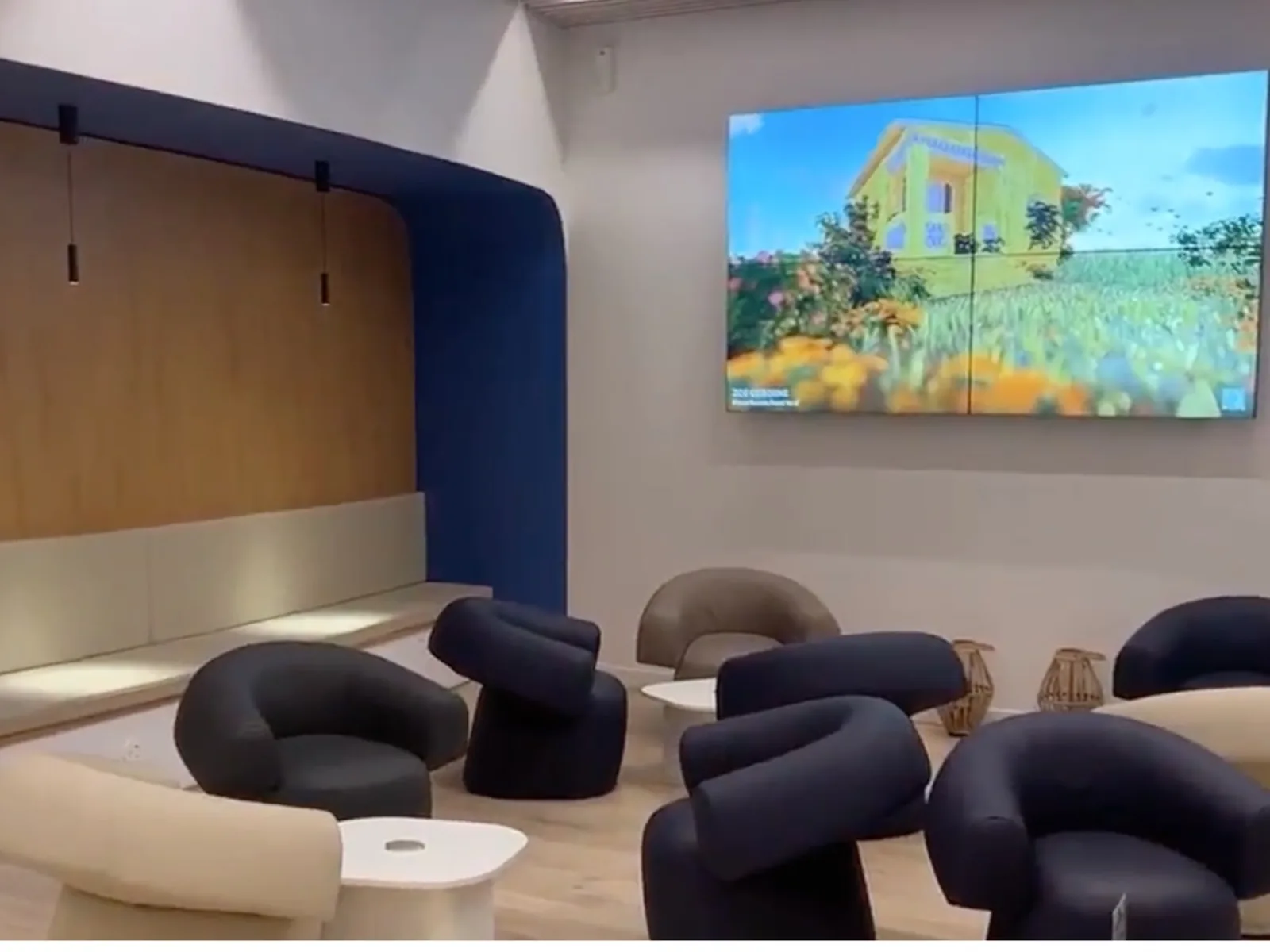
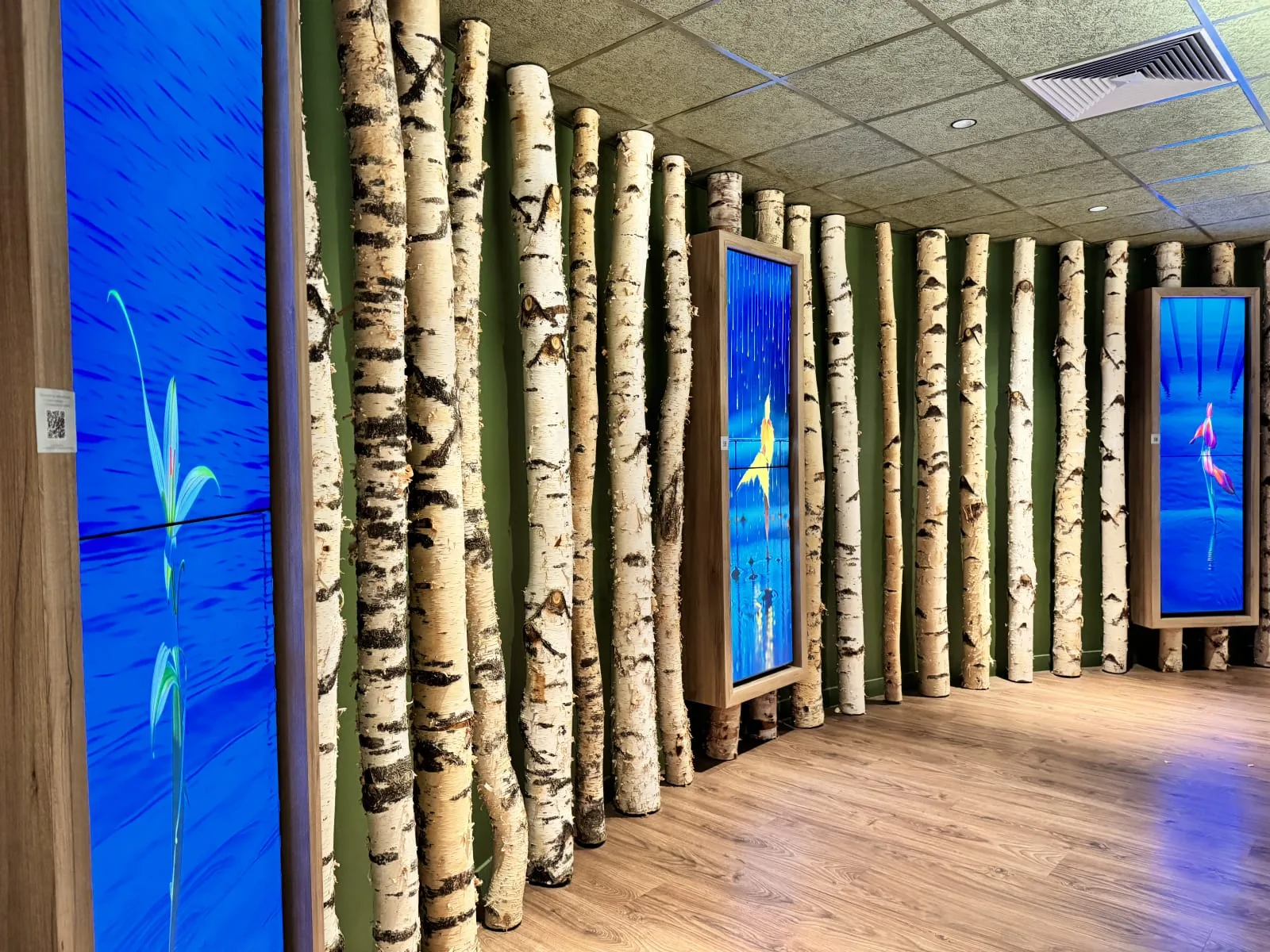
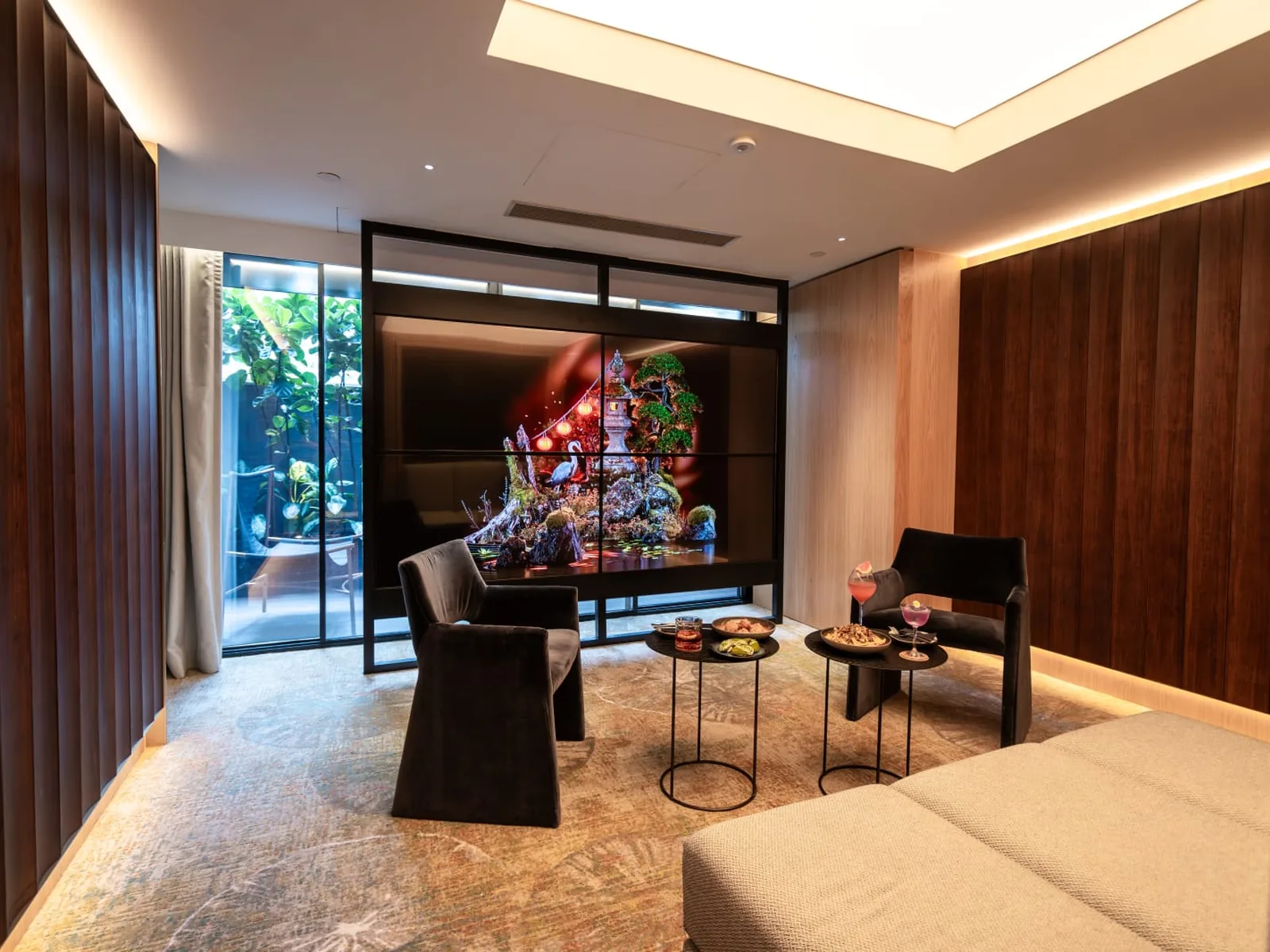
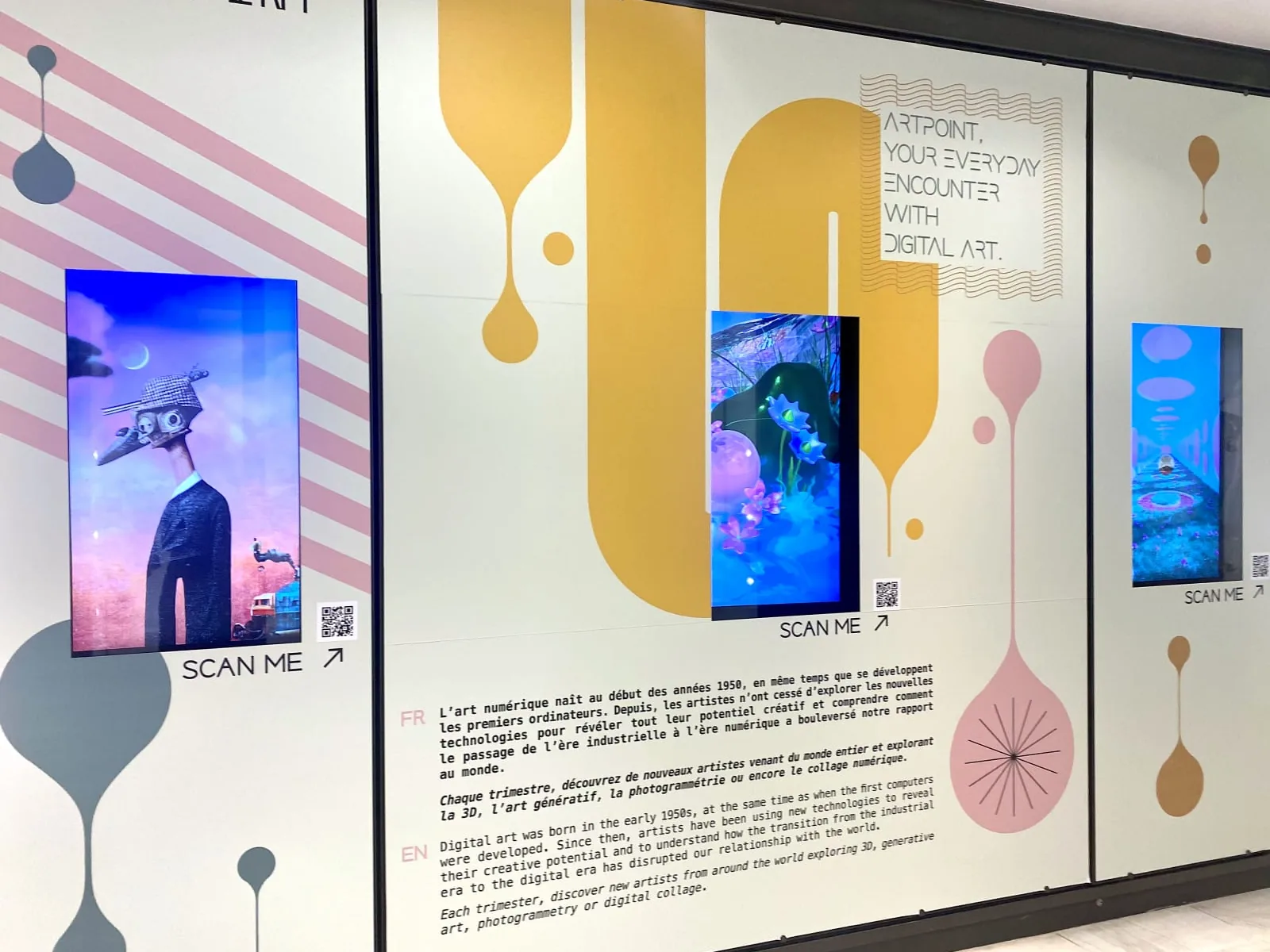
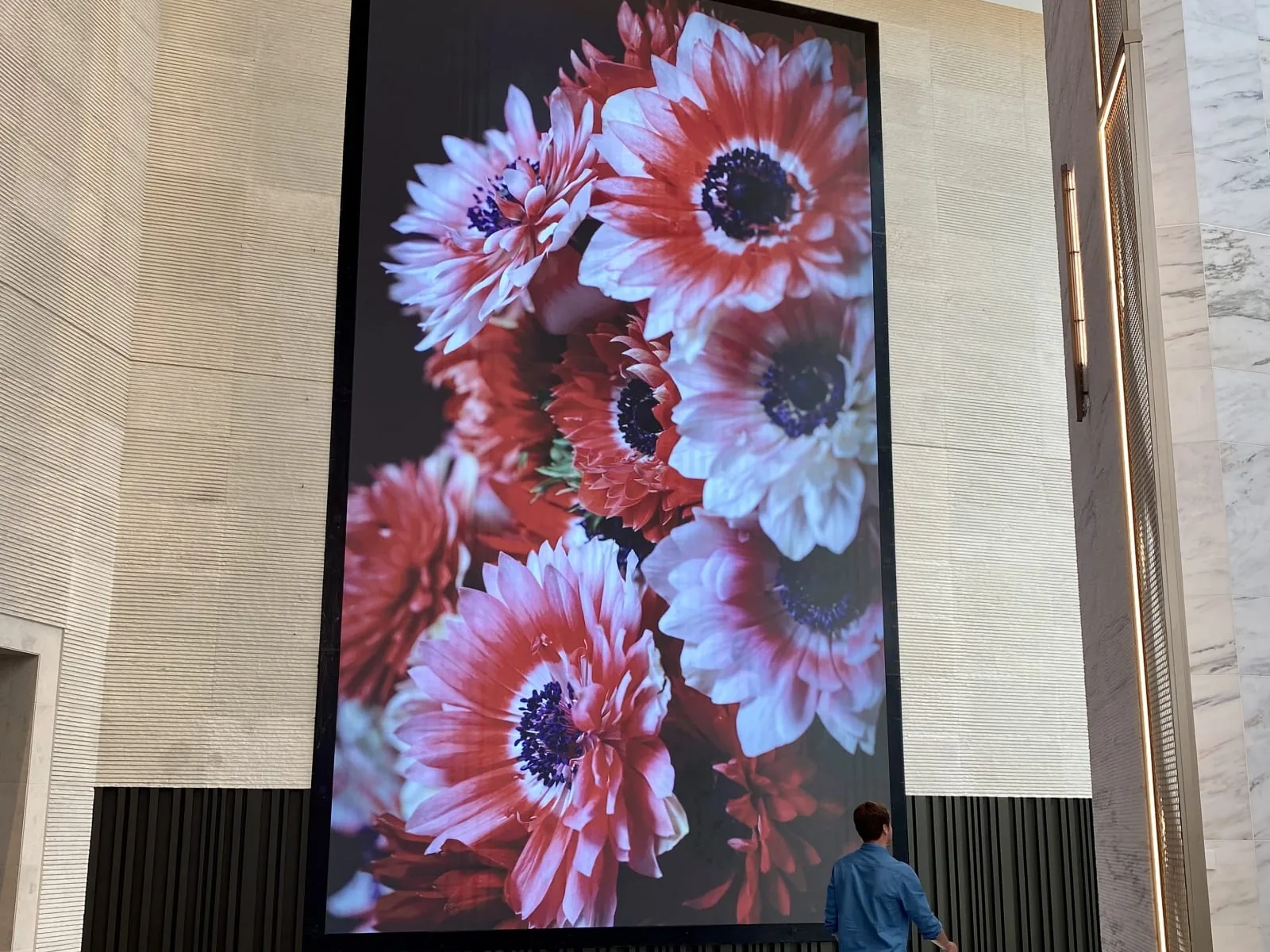
Photographs: ARTPOINT, taken from its projects. The artworks shown remain the property of their authors.
TogetherClient story
APRIL:
a digital artwork on every floor
APRIL is a reference shared by ARTPOINT and EMITY. When its new Lyon headquarters opened, every floor was given a theme of its own — sculpture, photography, painting, cinema — and the teams themselves picked the artworks, from an online gallery opened to a vote.
Video: ARTPOINT, filmed on site at APRIL in Lyon.
TogetherEnvironment
The footprint
of a digital artwork
In the traditional art world, transporting the works is the single largest source of emissions. A digital artwork arrives over the network: no crate, no freight, no courier.
The order of magnitude
ARTPOINT puts figures to the gap: flying artworks from Miami to Basel for a temporary exhibition can weigh up to 1.4 tonnes of CO₂ — on their reckoning, the equivalent of more than two years of continuous playback on a large LED screen.
Screens already there
ARTPOINT states that 80% of its projects run on screens that already exist. That is EMITY’s logic too: supporting every manufacturer avoids replacing an estate that works.
A screen that switches off
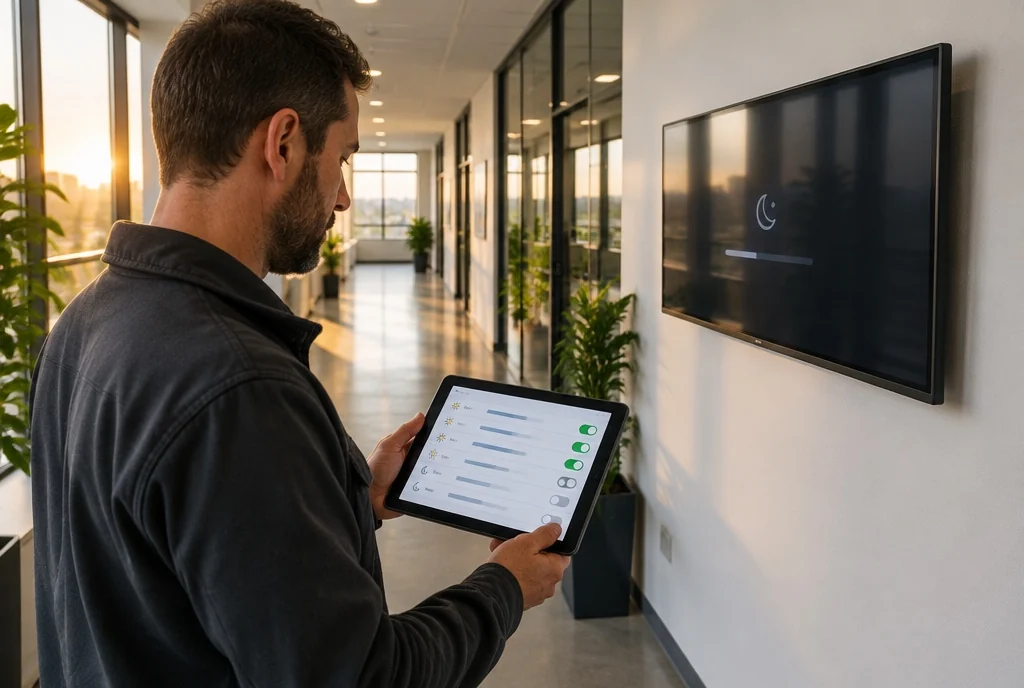
A screen left on overnight serves nobody. Time-based scheduling stops playback outside opening hours, and the artworks pick up again in the morning.
One surface does not suit: electronic paper
E-paper panels display without a backlight and refresh slowly: they are built for fixed content — statutory notices, opening hours, prices — not for a moving artwork. To show art, plan for a conventional backlit screen. See the display options.
TogetherFrequently asked questions


