
Schindler case study: digital signage inside the elevator car
The elevator and escalator manufacturer turned the in-car screen into a service of its own. Close to a hundred screens now inform passengers, all managed remotely from the EMITY platform.

The context
A manufacturer that turned its product digital
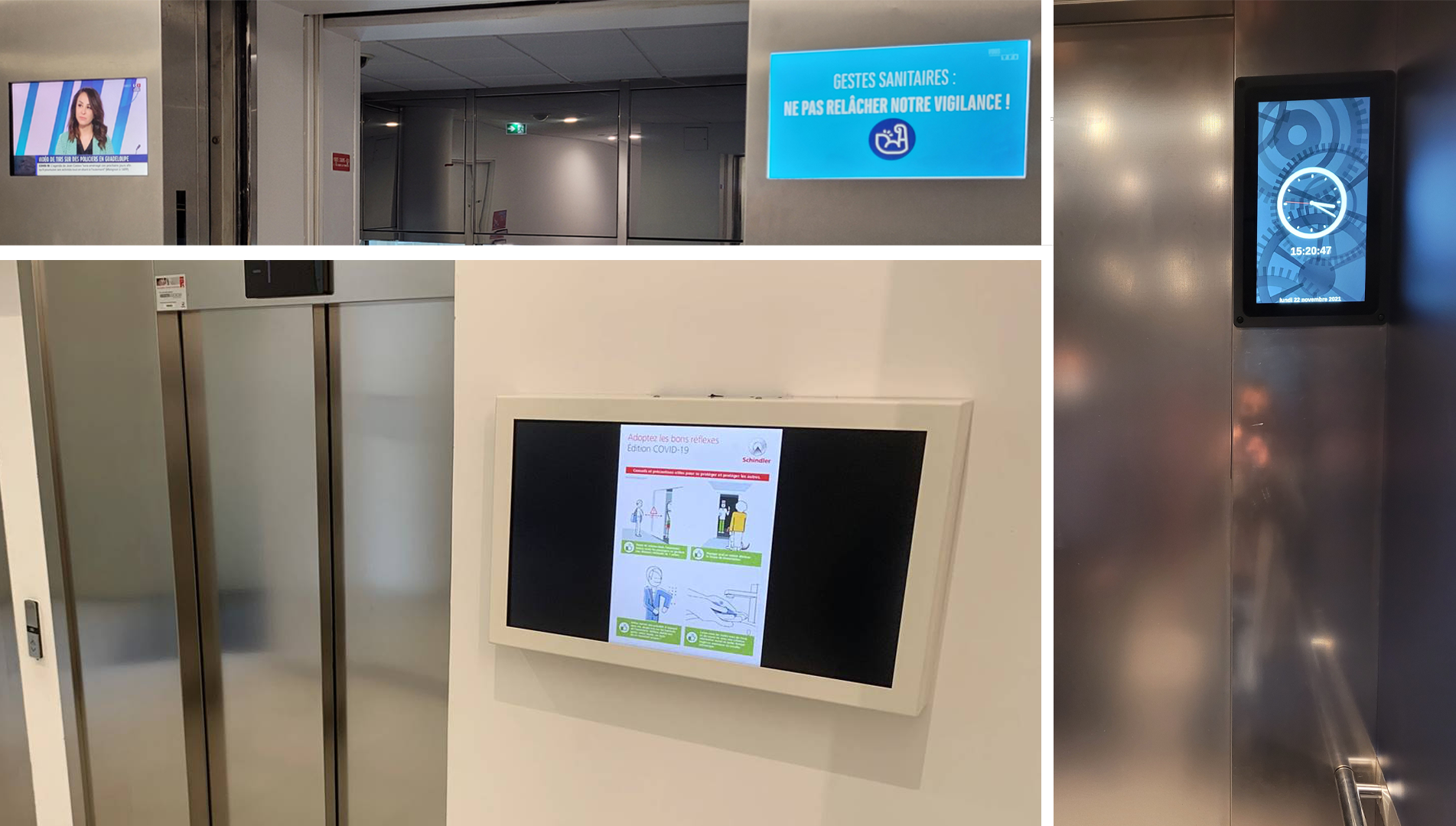
Schindler designs and services elevators and escalators. In 2018 its French subsidiary launched E-screen : a connected display fitted inside the elevator car, showing information to passengers during the ride. The software that runs those screens — what the industry calls digital signage, meaning content delivered and scheduled remotely across a fleet of screens — is EMITY.
Here is the point worth keeping : Schindler did not buy digital signage for its own internal communication. The screen became a line in its catalogue, offered to the property managers who install its elevators. That changes the brief entirely : what ships has to hold up in front of the end customer, building after building, with no technician on site.
The decision took the form of a framework agreement, so the fleet can grow building by building without renegotiating at every site. Close to a hundred screens are installed to date.
The need
What a screen inside an elevator car demands
An elevator screen is not run like a lobby screen. Four constraints shape the project.
A few seconds of reading time
An elevator ride rarely lasts more than a minute, and nobody sits down to read. The message has to land at a glance : few words, large type, no scrolling text.
A scattered fleet, one screen per building
Every car is an isolated point, usually with nobody on site to step in. Everything has to be visible and fixable remotely : what is playing, how the screen is doing, what is scheduled for the day.
A shaft that is unkind to networks
Building Wi-Fi carries poorly into an elevator shaft, and the car keeps moving. Playback has to survive a dropout and catch up as soon as the link returns.
A fleet that grows without a change of method
One building, then ten, then a hundred. The way the fleet is run on day one has to hold at every scale, otherwise each new site costs a little more than the last.
The answer
What EMITY brings to the project
Six building blocks, all of them in use on this deployment.
Day-to-day
The whole fleet from one browser
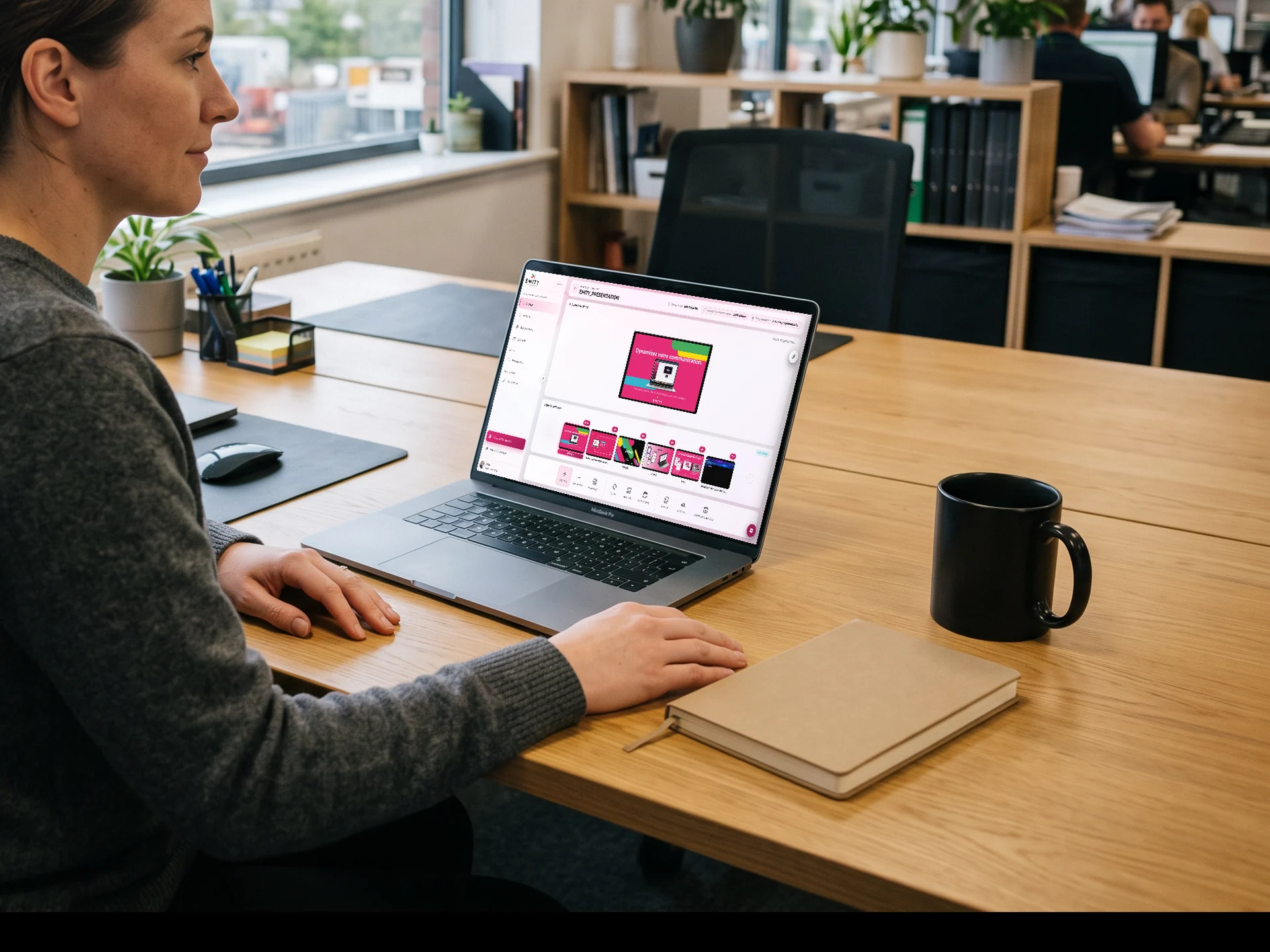
The whole thing lives in a browser. From E-MANAGER, one person sees the entire fleet, builds a playback loop, schedules it against a time slot and sends it to a group of cars. No travel, no intervention inside the building.
That is what makes the model work for a manufacturer : the running cost of one more screen is close to zero. The first building and the hundredth are handled the same way.
In practice
How a rollout runs
Four steps, the same for the first building and the hundredth.
The screen goes in
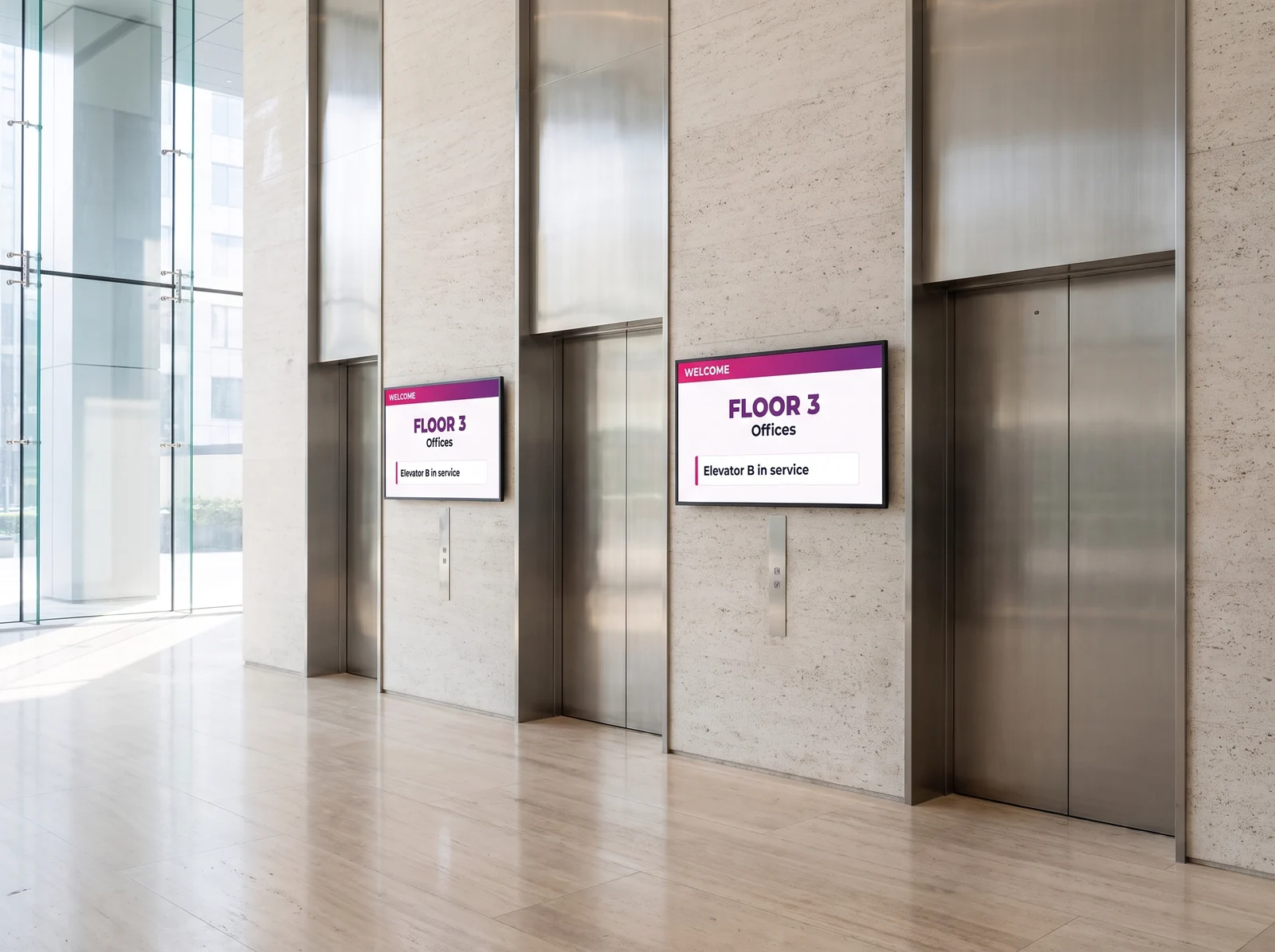
Inside the car, on the side wall or above the buttons ; on the landing, next to the doors. Format follows the spot : portrait for a narrow panel, landscape for a header.
It connects to the platform
On a connected display — Android TV, Tizen or webOS — the E-SOFT app installs straight onto the screen. On a display that is not connected, an E-BOX media player takes over. So the player is not systematic.
The content is composed
In the built-in editor : a background, a headline in large type, one line of information, a weather widget. Templates carry over from one building to the next.
The fleet is run remotely
Groups, time slots, swapping a visual, checking how the screens are doing : it all goes through E-MANAGER, from any desk.
The effects
What the screen actually changes


In the client’s words
What the Schindler team says
“It performs.”
Rahim, digital project manager at Schindler
“The partnership with EMITY works, the solution is reliable.”
Rahim, digital project manager at Schindler
The takeaway
Adding a screen to a product : what it changes
The Schindler case is worth reading beyond elevators, because it describes a mechanism that works for a lot of manufacturers : add a screen to a product already installed at the customer’s site, and turn it into a service.
- ✓Hardware that used to be compared mostly on price gains a service the competitor does not have.
- ✓The screen creates a line of recurring revenue, where selling equipment is a one-off.
- ✓The manufacturer keeps a link with the building after installation, and a reason to come back to the customer.
- ✓The content stays under the property manager’s control, and that manager becomes a user of the platform.
Frequently asked
What property managers ask
Going further
Other deployments
Every digital signage case study published on this site states the sector, the year and the size of the fleet installed.
- ✓GLS France — 111 screens at the end of every dock at the Paris Sud hub, wired to their yard management software.
- ✓Europcar — 360 screens and tablets across rental branches, run from one central interface.
- ✓Bureaux & Co — 16 screens across coworking spaces : rooms, services, life of the place.

