

The case in brief
One branch is easy, 360 is not
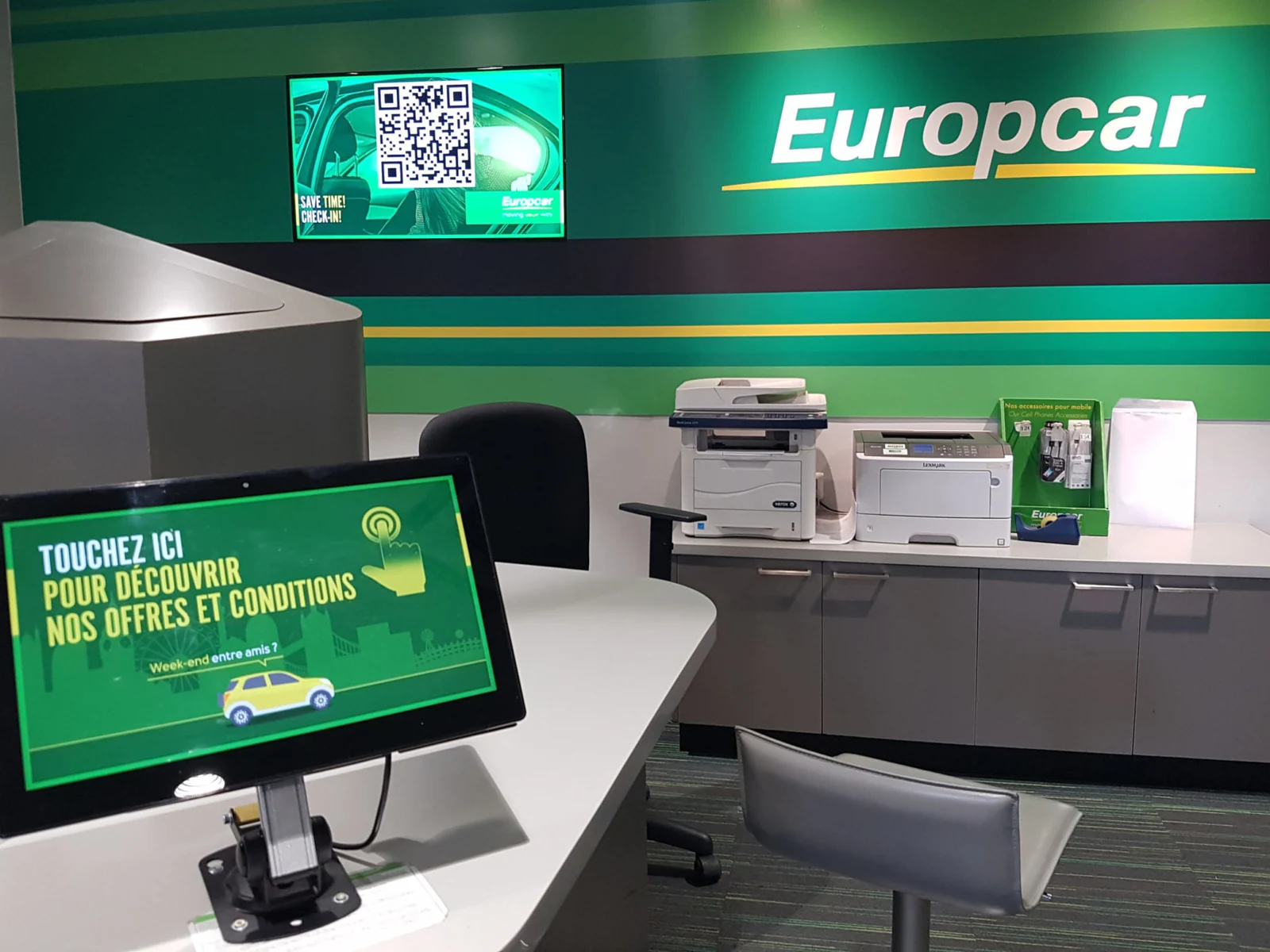
In a car hire branch the customer waits standing up, with time to look around, while the agent behind the desk has both hands full. That is the moment a screen earns its place: pointing people to the right desk, showing what a vehicle class actually includes, carrying an operational notice.
Fitting out one branch is straightforward. Fitting out several hundred and keeping control of what they show is not. Europcar has published since 2020 to 360 screens and tablets driven with EMITY, in France and abroad, from a single web dashboard.
2020
went live
360
screens and tablets driven
2
formats: wall and hire desk
1
dashboard for the whole network
Who the client is
A car hire brand in close to 140 countries
Europcar is one of the best-known names in car hire worldwide, and part of Europcar Mobility Group.
Reference points recorded on 14 August 2026 from the group’s own communications: the brand was founded in Paris in 1949 and now covers close to 140 countries through a network of several thousand branches, both corporate and franchised.
Those are the brand’s figures, as at the date shown. What EMITY fitted out is what this page describes: 360 screens and tablets since 2020, and the dashboard that drives them.
- ✓Branches in city centres, at stations and at airports
- ✓A hire desk in every one of them
- ✓Brand guidelines to hold identically everywhere
- ✓Commercial offers that move with the season
- ✓No technical staff on site, in most branches
Where it starts
Three constraints specific to a branch network
Before any talk of features, here is what a network of branches asks of a marketing team.
One brand, hundreds of shop windows
Every branch is a point of contact with the brand. Where display is decided locally, it drifts locally — and it is the gap between two branches that damages the image, not the quality of either one.
Nobody to plug in a cable
A car hire branch has no IT staff. Anything that needs somebody on site — an update, a change of schedule — either will not happen, or will happen late.
A commercial tempo, not an IT one
A seasonal offer, a last-minute promotion, an operational notice on a busy Saturday morning: the acceptable delay is measured in minutes, not weeks.
What they use
Six features built for a network, not for one screen
This is the scope installed: nothing that assumes technical skill in the branches.
Central control
The whole estate is driven from E-MANAGER, a web dashboard: nothing to install in the branches, no local hands to call on.
Two formats, one tool
Wall screens and hire-desk tablets are scheduled together, in formats suited to each: the queue and the customer at the desk are not reading the same thing.
Targeted publishing
The whole network, one region, a single branch: the scope is chosen at publication, which makes a local promotion possible without stepping outside the frame.
Brand guidelines held remotely
Templates are prepared at head office and made available to the branches. Local latitude stays possible; the guidelines do not bend.
Estate monitoring
The state of every screen is reported back in the interface. A screen that has stopped playing shows up at head office, without waiting for the branch to ring in.
Remote commissioning
Each new branch is configured from E-MANAGER, which is how the rollout ran branch by branch without interrupting day-to-day trading.
Around the branch
Three places, three moments in the customer’s visit
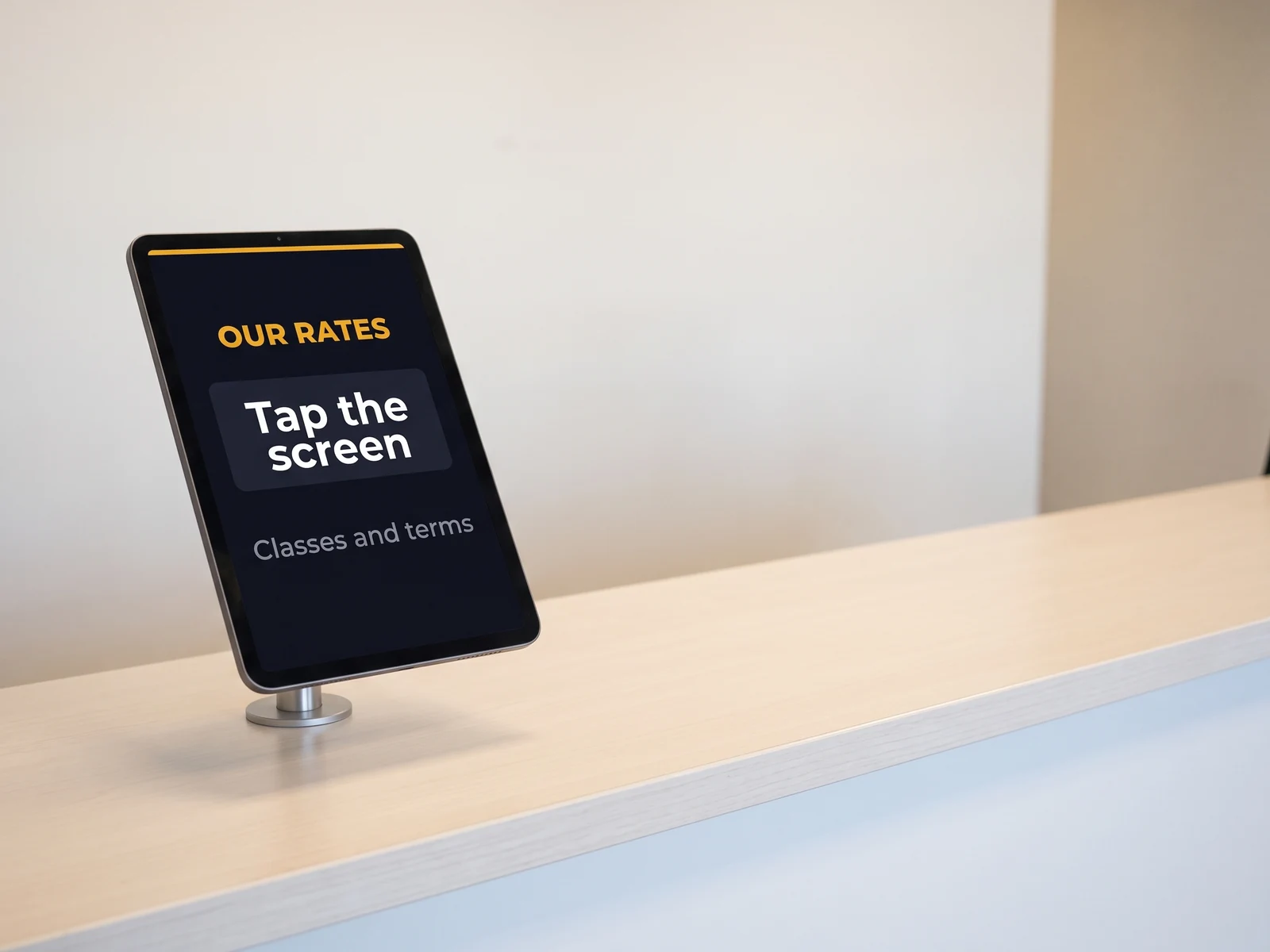
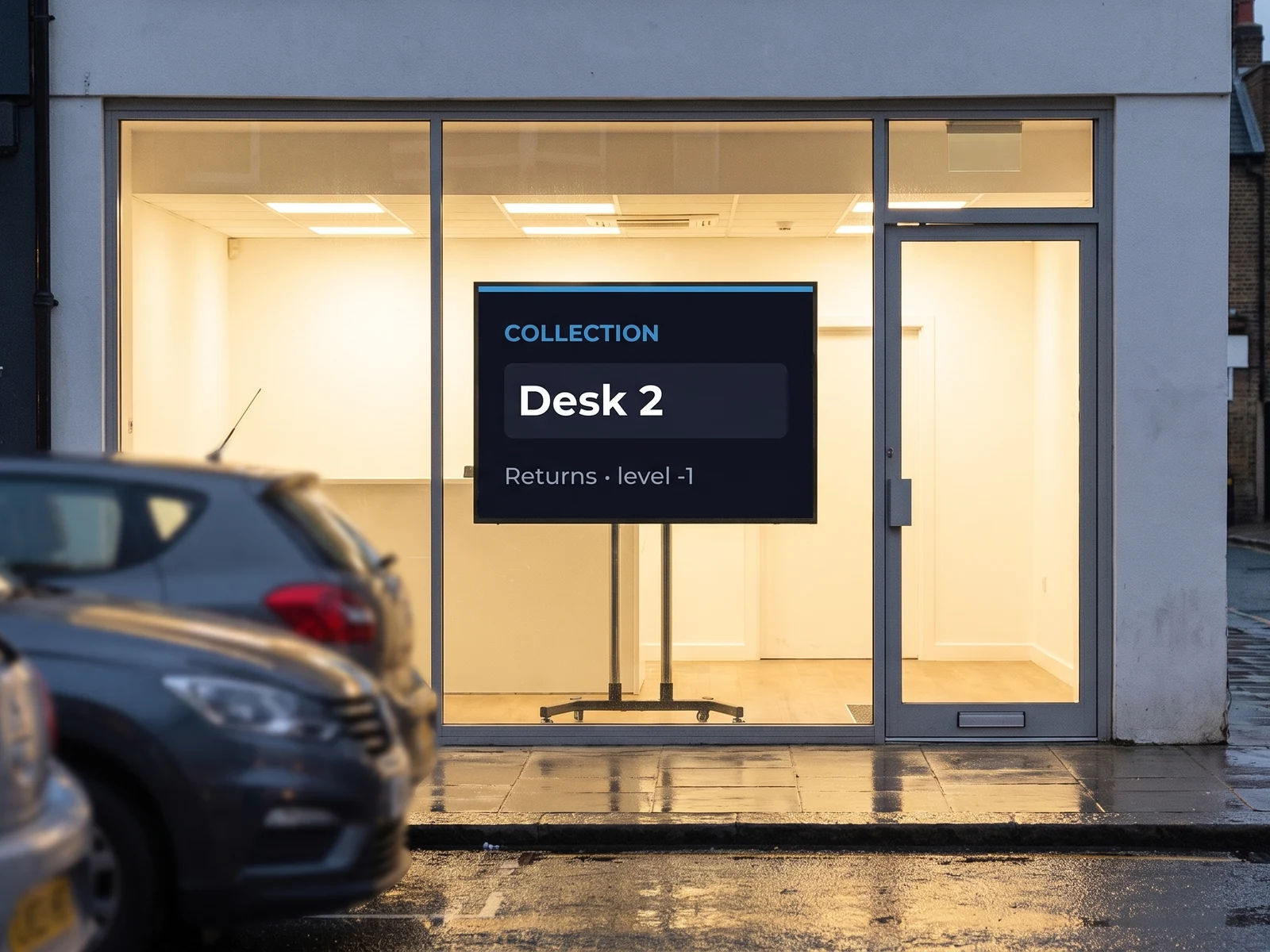
The first image is a photograph of the Europcar rollout. The two that follow are staged scenes: the setting illustrates the use, they are not branches of the brand.
The tool
The screen 360 screens are scheduled from
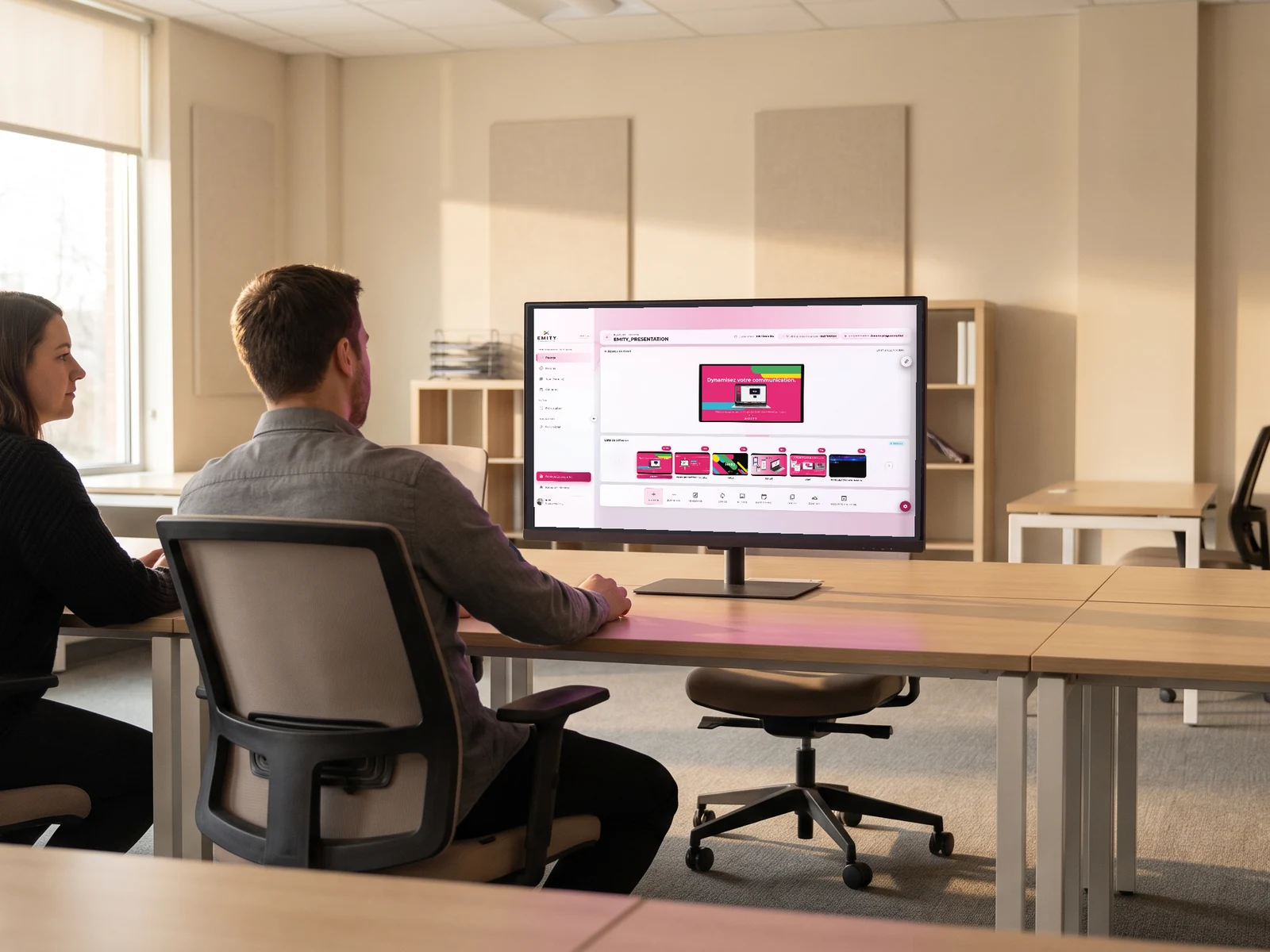
- ✓A live preview of what the estate is showing
- ✓A schedule as a list, with the time each item holds
- ✓Scope chosen at publication: network, region or one branch
- ✓Screen status reported back to head office
- ✓Templates that keep every branch on brand
The rollout
An estate of 360 screens, built branch by branch since 2020
A network is not fitted out in one go: it is fitted out branch by branch, without ever closing one to do it.
Network audit
Mapping the branches and what each one needs: the window, the waiting area and the hire desk are not the same job.
Multi-site rollout
360 screens and tablets installed then configured remotely from E-MANAGER, branch by branch, without interrupting trading.
One voice across the network
With the estate in place, publishing happens across the whole network from a single tool — and the state of the screens reports back to head office.
The client’s words
What the branch teams take from it
The feedback from Europcar’s marketing team, as it appeared in the original case study.
“Staff and customers like the screens, and video draws the eye more than a printed sheet. It helps the customer take in what is on offer, and understand it.”
Why EMITY
The four pillars of the partnership
Brand image
A consistent, well-made visual message in every branch, which strengthens the brand at each point of contact with the customer.
Responsiveness
Content is updated across the network: a flash offer or a change of message rolls out in minutes.
Technical reliability
Stability and uptime across 360 screens and tablets, with remote monitoring and continuous diagnostics — without calling on branch teams.
Support
From the first audit to post-rollout support: advice, training and follow-up, with somebody who knows the network.
What this means for you
What this case says to network brands
Car hire, a dealership group, a franchise, a service network: the same question comes up the moment a brand wants the same message in every outlet without sending somebody out to each one. The number of screens changes; the logic does not.
Across the whole estate, EMITY today connects more than 7,000 screens for more than 1,000 customer accounts in over 20 countries, supported by more than 130 certified reseller partners.
The automotive sector
Dealerships, workshops, outlets: digital signage in the automotive sector. That is where this case leads.
Running several sites
The question that belongs to network brands: multi-site digital signage, and how to target one branch without touching the others.
Screens, the platform, the other cases
What displays and what drives it: the screens and E-MANAGER, the digital signage platform. And the other customer cases.
Frequently asked questions


