
Customer case · Logistics
Colissimo: 300 screens
across its sorting centers
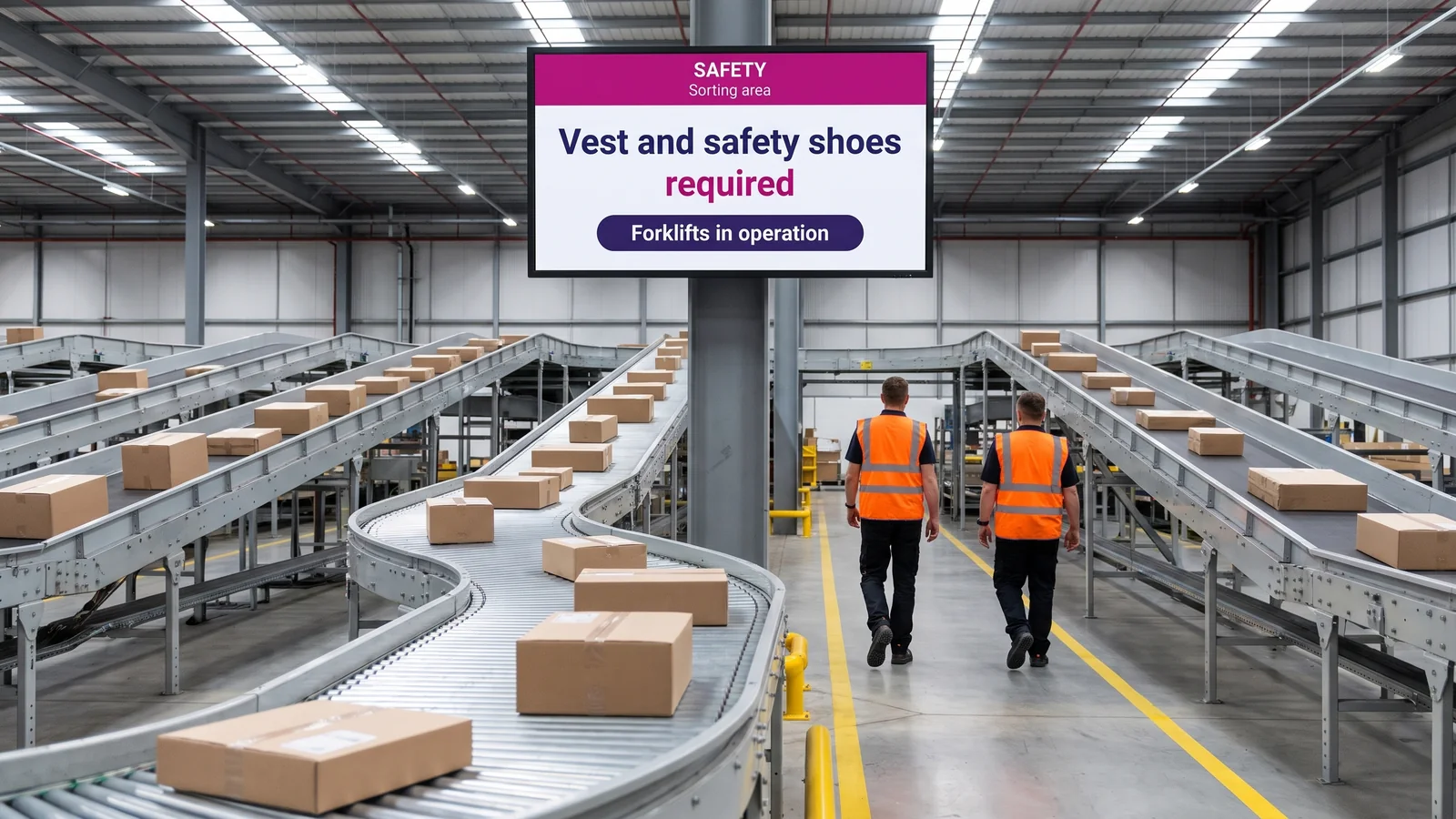
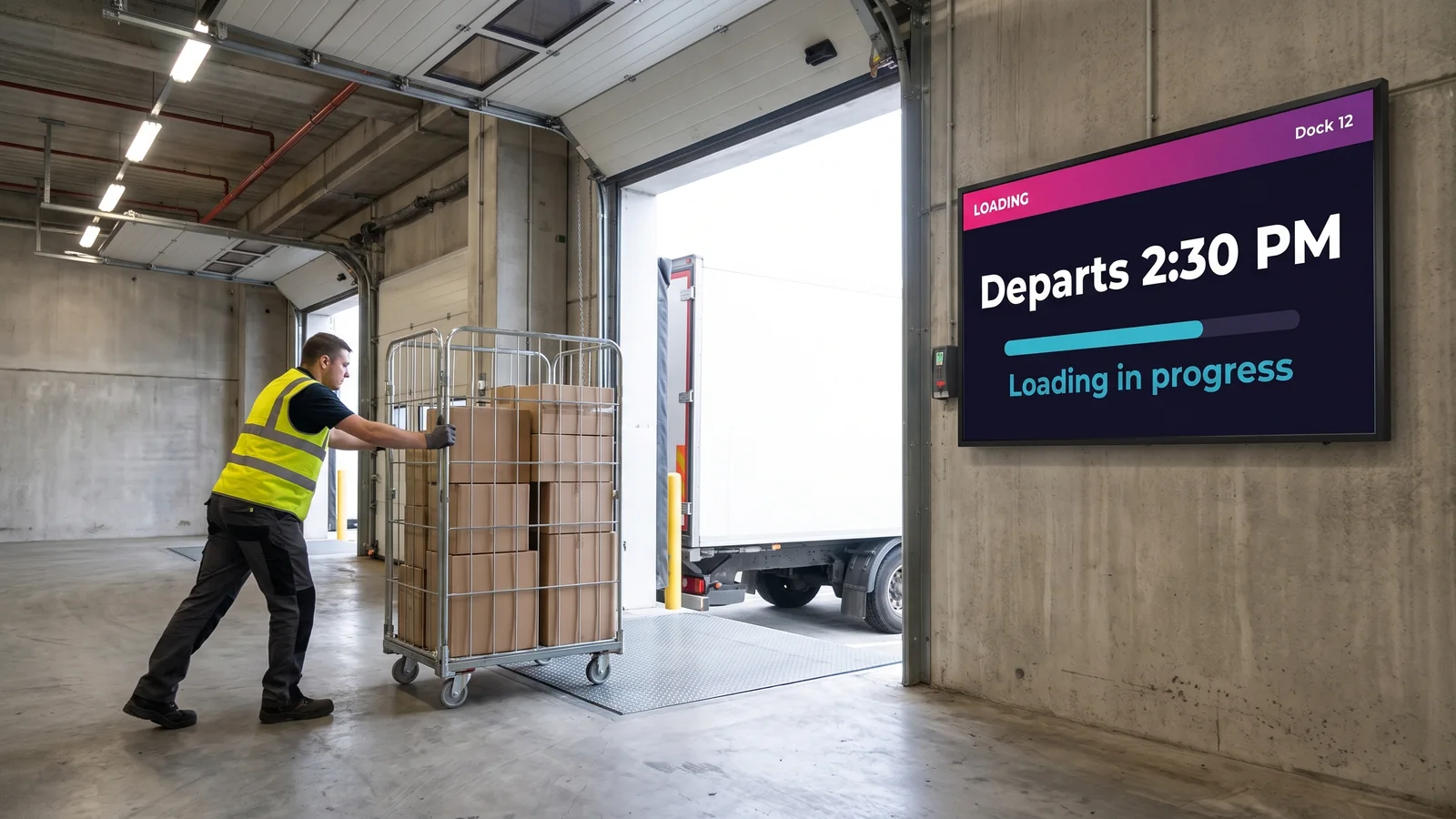
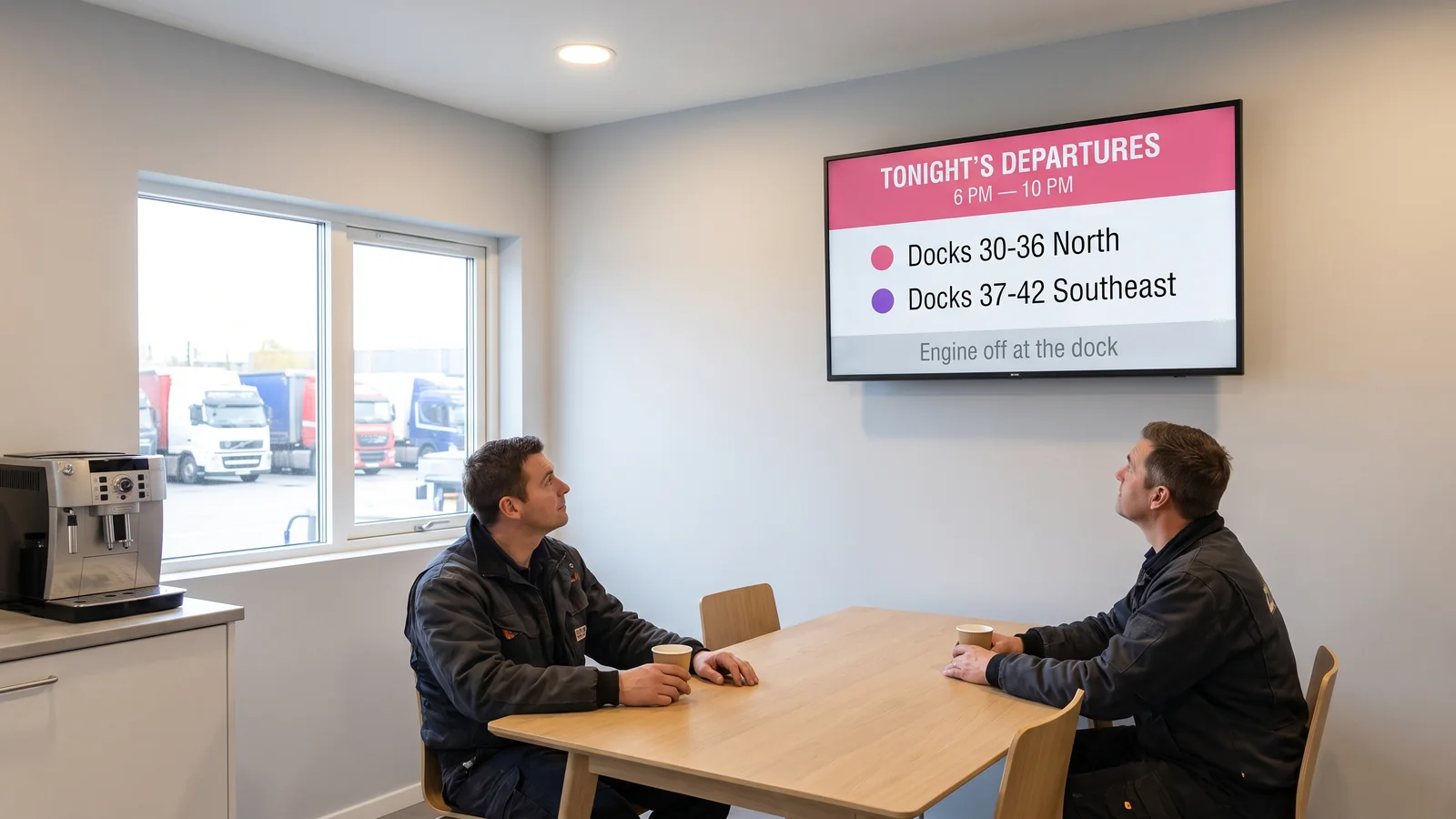
Thirty screens in late 2020, three hundred today. The parcel delivery arm of the French postal service shows safety instructions, truck loading status and driver information across its sorting centers — from software installed on its own servers.

The deployment in brief
One site in late 2020, the sorting centers of France today
Colissimo is the parcel delivery service of La Poste, the French postal operator, and has been running since 1989. Its sorting centers work around the clock: thousands of parcels move through them every hour, trucks pull up to the docks all day long, and the teams that keep it all moving do not spend their day in front of an office screen.
To carry internal communication all the way to those workstations, Colissimo chose EMITY in late 2020. About thirty screens on a first site, then a gradual rollout across the sorting centers of France, up to the 300 screens in service today. The software runs on the company’s own servers and Windows workstations, inside its own IT environment.
300
screens in service
30
screens at go-live
2020
year of the first installation
Excellence
the plan they chose
The starting point
Inside a sorting center, information struggles to travel
Before talking about screens, it helps to look at the floor. Three constraints show up in every warehouse and every parcel hub — and they are what explains the choice Colissimo made.
Teams without a workstation
A sorting operator, a forklift driver, a truck driver: nobody checks their inbox between two waves. A memo sent by email reaches only part of the workforce, and rarely at the moment it matters.
Three shifts that never meet
Morning, afternoon, night. A notice pinned up in the break room at 10 a.m. does not have the same shelf life as an instruction that has to land before every shift start — and the paper version stays on the wall long after it expired.
Distance and noise
A sorting center is measured in hundreds of yards, with machinery that drowns out the voice. Information has to read at a glance, while walking, right where the work happens — not only in an office at the far end of the building.
On the floor
Three needs, three screen locations
The EMITY software suite serves internal communication inside the sorting and loading areas. Three uses were identified at the start — safety, loading operations and driver information — and they are what shaped where the screens went.
Running the fleet
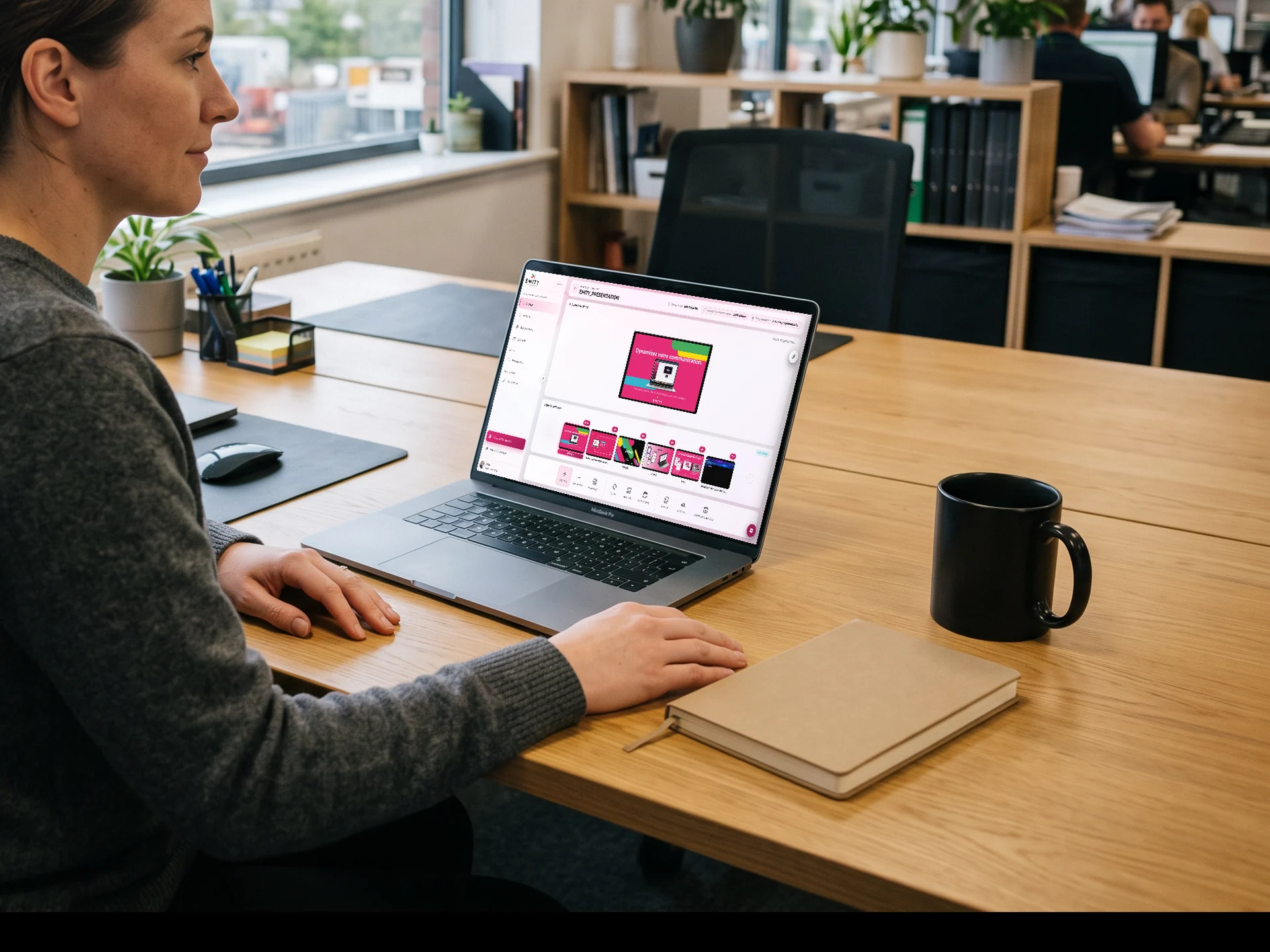
One dashboard for the whole network
- ✓A shared template reused by every new site that comes online
- ✓Content built in the EMITY built-in editor — and, if your teams already use them, in Canva or Adobe Express
- ✓Intranet pages displayed as a zone of the screen, refreshing on their own
- ✓Scheduling ahead of time, by site, by screen and by time slot
What decided the choice
Software installed at the customer, not just reachable from a browser
Colissimo was looking for a partner able to offer a digital signage solution compatible with the security standards of La Poste’s infrastructure. That point, more than any feature list, is what opened the project.
The answer came down to one thing: the software was installed inside the customer’s own IT environment. The display server lives at Colissimo, content never leaves it, and fleet management stays local. EMITY supports both models; here is what separates them.
| Hosted by EMITY | Installed on your side (the Colissimo choice) | |
|---|---|---|
| Where content lives | On EMITY servers, in France | On your servers, inside your information system |
| What crosses the network | An outbound connection to the EMITY platform | Nothing has to leave: screens and server talk internally |
| Updates | Applied by EMITY, with nothing to do on your side | Scheduled with your IT department, in your maintenance windows |
| What you need | A browser | A host machine and a security review, like any internal application |
| Typical case | A multi-site network that wants to move fast | A regulated or tightly segmented information system |
The hardware
Nothing to replace: the signage sat on the existing fleet
This is often the first thing that stalls a signage project on an industrial site — the fear of having to buy screens all over again. Here the hardware was chosen before the software was.
The screens were already chosen
The Colissimo technical teams had selected their screens before they picked a software vendor. EMITY supports every screen manufacturer, so the fleet did not have to be rethought to carry the signage.
Windows workstations did the playback
Digital signage comes down to two building blocks: a piece of software and a screen. The computers already on site carried the playback, with no extra player — a player only becomes necessary when the screen cannot run anything by itself.
The rollout followed the house rules
Machines approved by the IT department, installation inside the internal perimeter, day-to-day operation by the company’s own teams: the project fitted into existing procedures instead of asking for new ones.
How it went
From 30 to 300 screens, in stages
A multi-site fleet does not go up in one go. The Colissimo fleet was built site after site, each one reusing what the previous one had proven.
One site, about thirty screens
In late 2020 the rollout starts on a single site, with the three uses identified up front. Wide enough to be representative, short enough to be judged.
The IT security review
Installing inside La Poste’s information system clears the company’s security requirements. That step is what everything else depends on.
Connecting the content sources
The EMITY engineering team hooks up the intranet pages and synchronizes what has to show at the different key points of the site.
Rollout, site after site
The next sites reuse the template that was validated. The fleet grows gradually to the 300 screens in service, under one contract and one training session.
And for you
What this rollout says to any logistics site
A parcel hub, a distribution warehouse, a production plant or a trucking depot share the same constraints: teams who are not sitting at a computer, shifts that follow one another, long buildings. What worked at Colissimo carries over: screens placed at the workstations, content driven from one place, and a hosting model chosen to fit the house rules.
Across its whole installed base, EMITY connects more than 7,000 screens for more than 1,000 customer accounts, in more than 20 countries, with the support of more than 130 certified reseller partners.
Construction and industry
Safety, production, shop-floor instructions: the uses closest to logistics, on the construction and industry page.
Multi-site companies
Reception, break room, workshop, meeting room: digital signage for companies, from 1 to 1,000 screens.
Frequently asked questions


